

Connect with us

Events

Breaking Convention: bringing together leading minds in psychedelics

Published

on

Breaking Convention: bringing together leading minds in psychedelics

More than 200 world-leading researchers in the field of psychedelics gathered at the University of Exeter for the sixth Breaking Convention.

Breaking Convention 2023 highlighted some of the latest psychedelic research alongside art, culture and philosophy.  

The event saw global thought-leaders share their insights and research, including mycologist Paul Stamets, Rick Doblin, founder of MAPS, Amanda Feilding, founder of the Beckley Foundation, LSD chemist William Leonard Pickard, author Graham Hancock and ethnobotanist Jonathan Ott.

See also  University of Exeter launches world’s first psychedelics postgraduate course

Author and Breaking Convention Co-Executive Director, Alexander Beiner, stated: “Psychedelics are hitting the mainstream as mental health treatments, but historically they’ve also been agents of social change and innovation – and if there’s anything the world needs more than ever, it’s new ideas.”

Exploring the latest research

Psychedelics have seen an explosion of research in recent years, and Breaking Convention showcased some of the very latest developments in the field through a number of panels.

This year saw talks discussing the use of ibogaine, featuring psychologist Genís Oña who explored underground ibogaine use for the treatment of substance use disorders, and neuroscientist, Deborah Mash, discussed the UK’s first MHRA-approved clinical trial for opiate-use disorder. 

The event also explored ketamine therapy – a treatment that has recently been introduced in the UK, following in the footsteps of the US – as well as the latest research investigating DMT.

See also  Breaking Convention: is ketamine therapy the next mental health innovation?

Breaking Convention Co-Founder Dr David Luke and David Erritzøe, Clinical Director for the Centre for Psychedelic Research at Imperial College, London discussed the latest updates on psychedelic treatments for depression, and neuroscientist Chris Timmerman, presented “the current state of DMT research”, including phenomenology, the effects on the brain, its impact on beliefs, and “how we can extend it as a tool for consciousness exploration and clinical development.” 

A pan-African perspective on psychedelic healing was also explored. Chaired by educator and ShroomShop course leader Darren Le Baron, with Hub and Culture co-operative founder Akua Ofosuhene, principle organiser of the 2021 ‘Decriminalization of Entheogens in Detroit, Moudou Baqui, and Kambo, Iboga and Mushroom Academy founder Acacia Lewis; both taught by the late Baba Kilindi Iyi, researcher of high dose psilocybin experiences. 

The event’s ‘Varieties of Transformation’ discussion included peace activist Leor Roseman who discussed his investigations of relational processes in the ayahuasca rituals of Palestinians and Israelis, alongside psychedelic therapist Friederike Mickel Fischer. 

The event took place at the University of Exeter – which made the announcement at the conference that it would be launching the world’s first postgraduate course in psychedelics.

Christine Hauskeller, Professor of Philosophy at the University of Exeter, whose Breaking Convention panel explored the ethics of the emerging psychedelic therapy industry, co-founded the dedicated Philosophy of Psychedelics conference at the university with philosopher of mind and metaphysics Dr Peter Sjöstedt-Hughes. 

Hauskeller stated: “The University of Exeter has become an important hub for research and teaching in Philosophy and Psychedelics.

“The growing transdisciplinary psychedelics team is delighted that Breaking Convention is relocating to Exeter. It greatly enriches our blend of academic and practitioner perspectives allowing for diverse discussions around psychedelics.”

Continue Reading
Click to comment

Leave a Reply

Your email address will not be published. Required fields are marked *

Evegreen

Have You Missed PSYCH Symposium 2025? Here Are The Key Takeaways — Part 1

Published

on

This article was made possible thanks to on-site reporting by Sasha Mbilika.

Last week, more than 250 professionals in the psychedelics space gathered at London’s Conway Hall for the third edition of PSYCH Symposium.

Researchers, regulators, investors and thought leaders gathered to discuss the past, present and future of psychedelic medicine in the UK and abroad.

Prof. David Nutt: The Harm of Psychedelics Has Been “Grossly Exaggerated”

Opening Remarks were given by Professor David Nutt, founder of Drug Science, the organisation that partnered with Prohibition Partners in hosting the Symposium.

Nutt shared a quote by Lord Dick Tavern, who has been a major influence in maintaining a sensible public dialogue about science, leading the charity Sense about Science to become the first patron of Drug Science. 

Nutt shared a quote from Lord Tavern: “It may take time, but in a democracy, those who base their case on strong evidence and are prepared to argue for it with conviction are likely to prevail in the end. The sensible policy on the use of drugs is not a hopeless cause”

Nutt said the quote echoes optimism for industry progress and highlights Drug Science’s ongoing role in the field as it recovers from the 1971 UN Convention that banned classic psychedelics worldwide. 

Nutt reported that potentially hundreds of millions of premature deaths result from inadequate mental health care and a decline in research. He continues to advocate for greater awareness, noting that the harms allegedly produced by psychedelics have been grossly exaggerated.

Prof. Nutt and Compass’ Dr. Guy Goodwin Discuss Access To Psychedelic Healthcare

Nutt remained on stage, and was joined for a panel discussion with Dr. Guy Goodwin, Compass Pathways’ Chief Medical Officer. The talk was moderated by Anne Philippi.

Guy discussed the company’s role in bringing psychedelics into mainstream health. Compass’ phase 3 study, recruiting almost one thousand patients, was completed earlier this year. 

The company is currently on track to submit a dossier with the US FDA in mid-2026. Goodwin explained that the FDA is less affected by politics than before and has seen great consistency of performance and messaging.

Goodwin also discussed Lykos Therapeutics’ failure to pass FDA standards for MDMA therapy and said that data published by the FDA on the decision provides a learning opportunity.

After highlighting concerns for veteran welfare as driving forces for some pro-psychedelic policies, Nutt communicated the importance of reframing the cost of mental health treatments to reflect their value.

Nutt said that he sees overall optimism about the future of psychedelics in mainstream healthcare and the potential for significant improvements in mental health treatments. Key challenges for moving the needle on policy approvals include improving the public perception and media coverage of psychedelics, discussing a possible rebrand to “neuroplastogens.”

He also noted the importance of demonstrating the true cost-benefit of psychedelic treatments to the public and regulatory authorities.

Justin Smith-Ruiu: Psychedelics and the Reality of Experience 

The conference’s main keynote was held by Justin Smith-Ruiu, professor of philosophy at Paris Cité University, who recently published “On Drugs,” a book that blends autobiography, intellectual history, and philosophical inquiry to explore the transformative impact of psychedelics on human consciousness and thought.

Smith-Ruiu discussed the potential of psychedelics for philosophical inquiry, offering engaging reflections on his personal experience with psilocybin, which helped him overcome a major depression and influenced his philosophical work. 

He advocates for philosophers to consider the legitimacy of psychedelic experiences in their inquiry.

As part of a series of historical speculations, Smith-Ruiu said philosophers like Descartes and John Locke might have used psychedelics in the 17th century, as evidenced by the historical availability of psychedelic substances like fly agaric and ayahuasca.

He calls for academic philosophers to question their grounds for excluding psychedelic experiences from philosophical inquiry, challenging academic philosophy’s historic exclusions. He noted that between 1925 and 1975, no anglophone analytic philosopher openly admitted to having a psychedelic experience and argues that philosophers should rely on first-person intuition and seek out unusual experiences.

The philosopher questions why modern philosophy has neglected psychedelics as a significant data point in understanding perception and reality.

Smith-Ruiu argues that psychedelic experiences can clarify how we perceive reality and challenge entrenched assumptions about the mind and world. The phenomenological tradition in philosophy values inner experience as a means of accessing the basic structure of reality, he said. First-person reports of altered states can reveal hidden structures of selfhood, time, and meaning.

Panel Discussion: Psychedelics in the Real World —Where Are We Now?

Prof. Michael Lynskey, Researcher at Drug Science, moderated a panel which explored concepts of “real world” drug use, including medical, recreational, and informal use, with an emphasis on equitable access and diverse application, agreeing on the need for inclusive regulatory models to ensure safe, effective psychedelic use.

The panel included Prof. Celia Morgan, Professor of Psychopharmacology at the University of Exeter, Dr. Helena Aicher, Researcher and Psychotherapist at Universities of Basel & Zurich, Prof. Ranil Gunewardene, Director of Evolution MET, and Steve Rolles, Senior Policy Analyst at Transform Drug Policy Foundation

According to the panelists, 99.999% of psychedelic use occurs outside clinical settings and most recreational use is pleasure seeking, involving social settings like parties, raves, or casual gatherings.

Psychedelics demonstrate the first true innovation in mental health treatments in 35 years and have the potential to address treatment-resistant conditions like severe depression and trauma, showing promise for complex mental health cases.

As per real-world cases of legal psychedelic use, the panelists mentioned Australia as the first country to legalize psilocybin and MDMA for therapeutic use. Switzerland has had “exceptional permissions” for psychedelic therapy for over 10 years. Significant regulatory gaps exist between medical, recreational, and wellness-oriented psychedelic use.

In two years of psychedelic treatment in a major Sydney hospital, zero adverse outcomes reported and some patients require multiple treatment rounds (3-6 doses) for complex conditions.Psychedelics have a lower risk profile compared to some conventional medications like Clozapine, the panelists said.

However, challenges exist in the clinical research space. Most clinical trials have rigid exclusion criteria that prevent studying patients most likely to benefit and traditional rating scales often fail to capture the nuanced, qualitative improvements patients experience.

In the UK, there’s a growing underground therapy movement. There’s also increasing interest in community practice models for psychedelic use thought there’s limited formal availability for psychedelic treatment.

The panelists recommend to develop more flexible regulatory frameworks, create harm-reduction strategies, improve accessibility to psychedelic treatments and continue research into diverse application contexts.


Continue Reading

Events

PSYCH Symposium: London 2025—What To Expect At Europe’s Landmark Psychedelic Gathering

Published

on

On 4 December 2025, London’s Conway Hall will host the third PSYCH Symposium, bringing together leaders across science, policy, investment and clinical medicine to chart the next phase of psychedelic healthcare in Europe.

Organised by Prohibition Partners in partnership with Drug Science, the gathering follows two sold out editions in 2022 and 2023.

The 2025 programme will explore the latest developments in psychedelic research, regulation and clinical delivery. Confirmed speakers include Drug Science’s Chair, Professor David Nutt, who’s also Professor of Neuropsychopharmacology and Head of the Centre for Psychedelic Research at Imperial College London, Jeff Smith MP, Co chair of the All Party Parliamentary Group for Drug Policy Reform, Professor Celia Morgan, Chair of Psychopharmacology at the University of Exeter, Dr Chris Timmermann, Research Fellow at University College London, and Nige Netzband, Founder of Athletes Journey Home UK, among many others.

Panels, keynotes, workshops and fireside interviews will examine new clinical data on psilocybin, MDMA, ketamine and emerging compounds, as well as policy frameworks, regulatory considerations, patient access and ethics within psychedelic assisted therapies.

Attendees at PSYCH Symposium London 2025 will engage in a fireside conversation titled “Are We Ready? The Future of Psychedelic Medicine in Mainstream Healthcare,” where Professor David Nutt and Dr Guy Goodwin, Chief Medical Officer at Compass Pathways, will examine whether psychedelic-assisted therapies can scale beyond specialist clinics and trials. 

Another key session, “MDMA-Assisted Psychotherapy: Working Out How It Works,”, features Professor Sunjeev Kamboj and Elisa Liberati presenting UCL’s latest MDMA trial (in collaboration with Drug Science)

 In “Disrupting Dependency: Psilocybin Therapy for Opioid Use Disorder,” experts will present early evidence from clinical trials that explore psilocybin as a treatment for opioid addiction, a pressing public health concern in the UK and beyond and in “Designing Breakthroughs: A New Human Study for Anorexia Treatment,” Dr Nadya Lisovoder of Shortwave Life Sciences and Roei Zerahia of MSICS Pharma outline a feasibility study exploring psychedelic assisted treatment for anorexia nervosa.

Two panels, including “Bridging the Gap Between Indigenous Wisdom and Modern Science” and “The Jungle vs. The Journal: What Western Science is Missing” examines the divide between clinical research and traditional indigenous practices. 

Organisers position the symposium as a forum designed to shape realistic and responsible pathways for psychedelic medicine in the UK, Europe and abroad. London’s role is central because the city hosts leading research institutions, an active investment community and an environment where regulatory innovation is closely monitored by international stakeholders.

Stephen Murphy, founder and CEO of Prohibition Partners, has characterised PSYCH Symposium as a focal meeting point for Europe’s psychedelic medicine sector, bringing investors, regulators, researchers and clinical leaders together in one place. He also emphasised the importance of grounding the conversation in patient needs and health outcomes, a theme he has carried through his broader work in emerging health industries.

“The sector is entering a phase where evidence, governance and clinical standards matter more than headlines. At PSYCH Symposium we want to create a space where scientists, policymakers and practitioners can examine what is working, what is not, and what must be built next for psychedelic treatments to serve patients safely and effectively,” said Murphy.

Professor David Nutt recently said to Psychedelic Health that he continues to strive for the regulation and equitable access of psychedelics because he believes they’re are “the most exciting new treatments for mental health disorders and addictions in half a century.”

Attendees at PSYCH Symposium can expect a curated and focused environment. The symposium is designed to facilitate meaningful exchanges between clinical trial leaders, policymakers, funders and practitioners, with attention to the specific regulatory and clinical context of the UK.

As psychedelic medicine moves toward more formal integration into mental healthcare systems, PSYCH Symposium London 2025 aims to consolidate current progress, present new evidence and support informed discussion on pathways to wider patient access. 

The full agenda for the event can be found at https://www.psychsymposium.com/agenda

Picture: PSYCH Symposium 2022 edition

Continue Reading

Events

UK festival to explore psychedelic medicine

Published

on

UK festival to explore psychedelic medicine
Image provided by Medicine Festival. Charlie Orellana - @raisedbyvolcanoes.

Returning for its fourth year, Medicine Festival is set to host some of the world’s leading psychedelic researchers alongside indigenous elders from across the globe.

Medicine Festival has established itself as the “alternative to the archetypal rock n’ roll hedonism” that is usually associated with festivals. Providing an alcohol and drug-free environment, the festival will feature talks, ceremonies, rituals and healing workshops – including panels on psychedelic medicine.

Co-Founder of Medicine Festival, Remi Olajoyegbe, commented: “With indigenous elders once again headlining our event, this year’s festival will be a Mecca for wellbeing, ceremony, world music, dance, sacred activism, nature connection, multicultural arts and a joyful celebration of diversity.

“Medicine is proud to be part of a growing global movement that is reigniting the ancient ways, reviving natural healing modalities, pioneering land-based technologies, bridging cultures and embracing the interconnectedness of all life as we strive to revive our planet at this critical time.”

Exploring plant medicine 

Alongside workshops on nature connection, permaculture, sound, tantra and sexuality and much more, the festival will see indigenous elders sharing thoughts and discussions, dance and song.

Ceremonies, rituals and healing workshops will be facilitated by the indigenous leaders, including lauded “Rockstar of the Forest” Ninawa Pai Da Mata, chief of the Huni Kuin tribe (Brazil), a gifted musician and shaman; Anthar Kharana from the Colombian tradition; Juan Carlos Taminchi from the Andean traditions (Peru); Christiana Aro-Harle from the Tuvan tradition (Finland); Tibetan monk, Tulku Lama Ahbay Rinpoche; and elders from the British Isles, such as Chris Park (Druidic tradition) and Annie Spencer.

All this will take place alongside discussions that feature psychedelic scientists from across the globe that are leaders in their field, including Darren Le Baron, Chris Timmermann, Dr Rosalind Watts, Leor Roseman, David Luke, Alexander Beiner, Rayyan Zaffar, among others. 
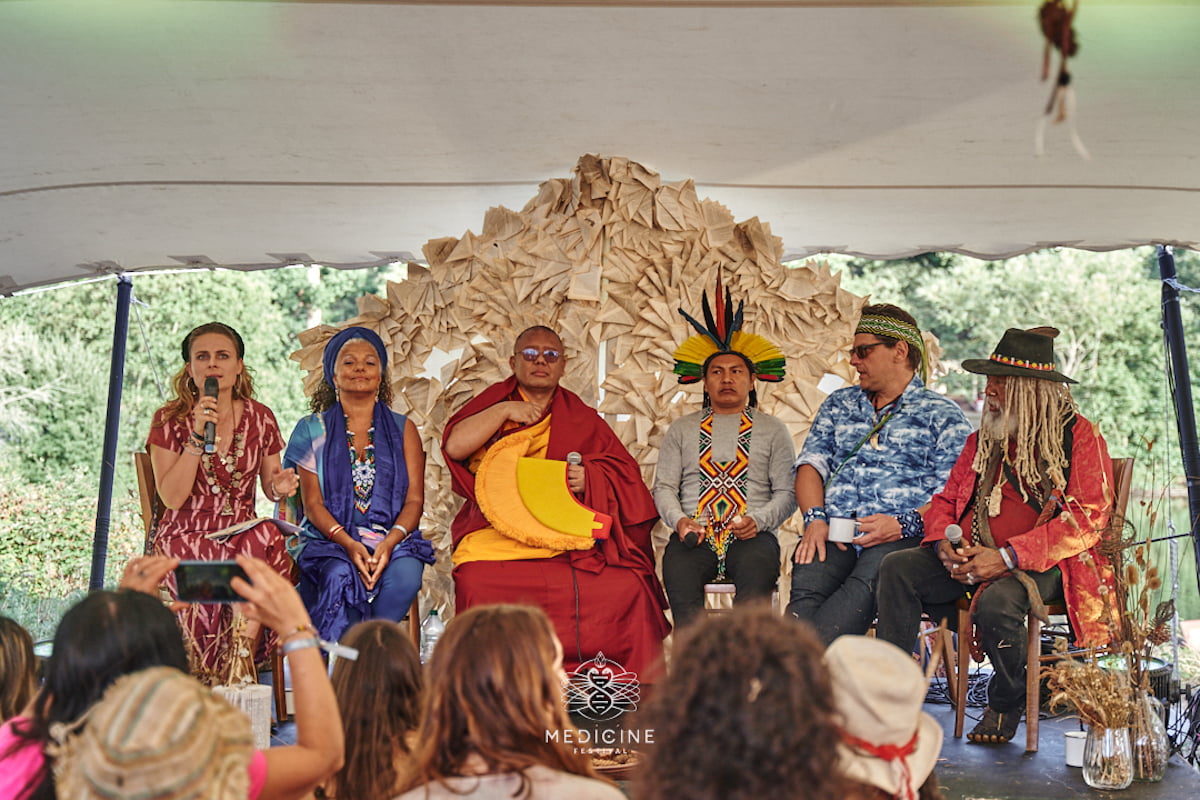
Image by Cecelia Fog.

Talks on psychedelic medicine, mushrooms and wellness include:

  • You Are A Mushroom Having A Human Experience. Talk + Q&A with Darren Le Baron.
  • The Brain and Altered States with Rayyan Zafar, David Erritzoe, Gregory Cooper, Maria Balaet, Rebecca Harding and Chris Timmerman.
  • From personal to collective: ayahuasca as a peace-making tool among Palestinians and Israelis with Leor Roseman.
  • The complexities of spiritual transformation: guru messiahs, spiritual narcissism and conspirituality with Mark Vernon, David Luke, Alexander Beiner, Jules Evans, Fleur Britten, Stefana Bosse and Jennifer Tessler.
  • What the Bleep is Healing Anyway? With Louis Weinstock and Sam Moyo.
  • The Medicine of Men’s Work with Michael Maisey, Peter Bennet, Leyth Hampshire, Alex Cottle, Lawrence Joye, Tony Riddle and Zak Avery.

An enlivening Wellbeing Programme will also host ecstatic dance legends Kareem Raihani (Amsterdam) and Mushina (Portugal), Movement Medicine maestro Ya’Acov Darling Khan, and offers a diverse spectrum of workshops and healing modalities – from yoga, meditation, breathwork and bodywork, to nutrition, forest bathing, reiki and massage.

Supporting indigenous communities 

As well as bringing community, entertainment and thought-provoking discussions, Medicine Festival is a C.I.C and not-for-profit organisation.

It holds the principle of reciprocity at its core, and its founding principle is that all profits each year go towards empowering indigenous peoples to preserve and protect their land, traditions and wisdom.  

Finally making a profit for the first time in 2022, Medicine has so far donated over £40,000 to selected charities like Survival International and Amazon Watch, and a variety of exciting projects across the globe, including a cultural restoration initiative for the Yawanawa tribe in Brazil and a programme providing education for Tibetan monks. 

“Four years in the making, we are delighted that the prayer of Medicine has finally become a reality,” says Zak Avery, Co-Director of Medicine Festival.

World music and family entertainment

The eclectic mix of music at this year’s event will encompass world music, folk, electronic dance and sacred songs from different global traditions. 

Headliners include Sam Garrett, Nessi Gomes, The Human Experience, K.O.G, Laboratorium Piesni, Fia, Ayla Nereo, Fanna Fi Allah, Awaré, Etherwood, DJ and climate activist El Buho and FaceSoul.

The Family area will offer games, creative activities, woodland adventures, storytelling and workshops for the youth in music making, bushcraft, foraging and sharing skills and inspiration for creating a healthier and more sustainable future.
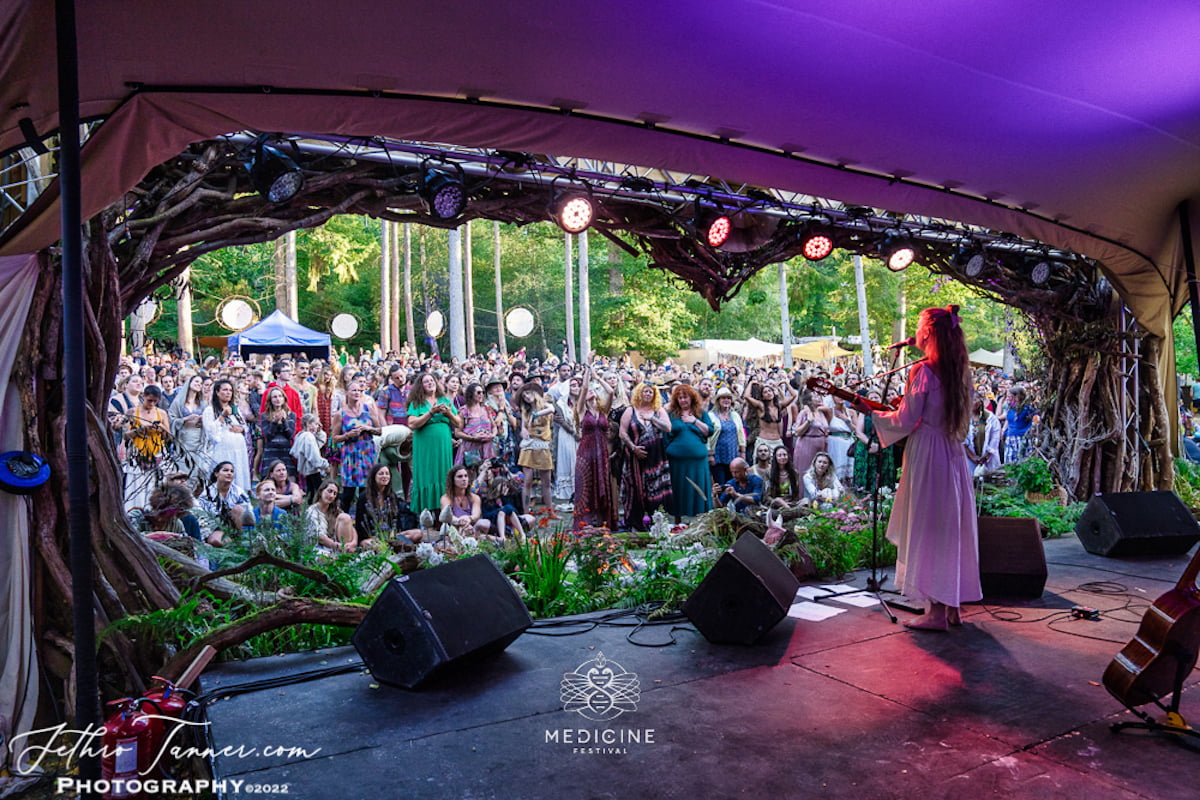
Strolling through wild woodland, beautiful parkland and past tranquil lakes, you’ll encounter fantastical theatre, storytelling and comedy performances, thought-provoking film screenings and a colourful miscellany of walkabout performers, poets and fire jugglers.

Jenna Ansell, Managing Director of Medicine Festival, says: “We are excited to unveil our newly expanded 2023 event and hope you can join us to explore the myriad ways you can experience the medicine, and be the medicine, as we come together for this wondrous, ceremonial celebration of life.”

Medicine Festival 2023 is now sold out, but anyone wishing to attend is encouraged to join the waiting list and look out for ticket resales: https://mailchi.mp/medicinefestival/2022-theme-emerge-10-off-tickets-17038724?e=719a4bab22

The event takes place at the Wasing Estate, Reading, Berkshire from 17 to 21 August, 2023.

Continue Reading

Trending

Psychedelic Health is a journalist-led news site. Any views expressed by interviewees or commentators do not reflect our own. We do not provide medical advice or promote the personal use of psychedelic compounds. Please seek professional medical advice if you are concerned about any of the issues raised.

Copyright © 2025 PP Intelligence Ltd.