Connect with us

Research

Psilocin prodrug receives USPTO development approval

Published

on

Psilocin prodrug USPTO approval

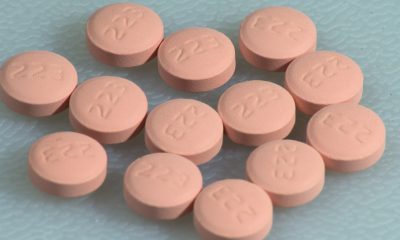
Enveric Biosciences has received a Notice of Allowance (NoA) from the United States Patent and Trademark Office (USPTO) for a patent application involving EB-373, the company’s new chemical entity (NCE) prodrug of psilocin.

The patent contains composition of matter claims for a family of novel prodrug derivatives of psilocin, including EB-373.

EB-373 is Enveric’s lead product candidate being developed for the treatment of depression and anxiety disorders. The company says the patent expands its intellectual property portfolio.

Joseph Tucker, Ph.D., Director and CEO of Enveric, stated: “Extensive and multilayered IP for our NCE compounds is an important value driver for Enveric as we seek to develop improved treatments for patients living with severe and difficult to treat mental health disorders.

“This recent positive decision from the USPTO strengthens the IP for our lead candidate, EB-373, and highlights the advanced molecular design capabilities of our research team in developing unique and novel psilocin prodrugs. 

“We look forward to bringing EB-373 to clinical trials soon to assess the potential of this compound to elicit a more rapid onset of action, more controlled therapeutic effect, and reduced gastrointestinal side-effects compared to conventional psilocin prodrugs, such as psilocybin.”

Enveric has confrimed that it has filed multiple composition of matter patent applications with the USPTO for psilocin prodrugs, including those comprising a crystalline molecular structure, and has submitted additional filings for companion Patent Cooperation Treaty and non-US national patent applications in an effort to obtain broad protections in target countries for its EVM201 and EVM301 Series of compounds. 

See also  Psilocybin for major depression study shows positive results

To date, the USPTO has issued seven NoAs for patent applications claiming compounds in the EVM201 and EVM301 Series. Two applications are now granted patents that specifically protect EB-373; and one application is now a granted patent covering certain EVM301 compounds. 

Continue Reading
Click to comment

Leave a Reply

Your email address will not be published. Required fields are marked *

Evegreen

Can Ego Death Be Measured? New Study Finds Link in Brain Activity After One DMT Dose

Published

on

A new study in The Journal of Neuroscience has shed light on how the psychedelic N,N-Dimethyltryptamine, or DMT, changes brain activity during its most intense psychological effects.

The research focuses on a key experience reported by many users of the drug, the temporary disappearance of the sense of self, often called ego-dissolution.

DMT is known for producing rapid, vivid and immersive psychedelic states that unfold within minutes. The study, led by Mona Irrmischer and colleagues, set out to identify what happens in the brain during this altered state, and how those changes relate to subjective feelings of becoming “less of a person,” or losing individual identity.

Dr Christopher Timmermann, one of the study’s co-authors, will be a panelist at the upcoming PSYCH Symposium: London 2025, on December 4 at London’s Conway Hall, where key figures in the psychedelics space will meet to discuss the future of policy, research and patient roll out.

To investigate this, the researchers used electroencephalography, EEG, which records electrical activity from the scalp. Twenty-seven healthy volunteers took part in two separate clinical sessions. In one, they were injected with DMT. In the other, they received a placebo saline injection. Neither participants nor experimenters were told which session was which at the time. EEG was recorded before and after injection, and participants later rated their subjective experience, including whether they felt the boundaries of their self dissolve.

The team measured what they call “criticality,” a property of brain activity that reflects the balance between order and randomness. A near-critical brain is thought to be versatile, able to shift fluidly between different states. It maintains patterns across long periods of time, which helps organize thought, perception and the experience of continuous identity. When the brain moves away from this balance, signals may become either too rigid or too chaotic.

See also  Emerging Innovations in Psychedelic Healthcare to take place in November

To quantify this, the researchers used two tools. One, detrended fluctuation analysis, or DFA, measures how consistent brain rhythms remain over longer timescales. Higher values indicate more structured, temporally coherent activity. Lower values show more noise and unpredictability. The other measure, the functional excitatory-inhibitory ratio, distinguishes whether changes push the brain toward suppressed subcritical states or toward unstable supercritical activity.

Under DMT, DFA values dropped significantly across several frequency bands, especially alpha rhythms. This means brain signals became less temporally organized and more entropic. The effect was widespread, not limited to a small region, indicating a broad shift in how neural networks behave over time.

The excitatory-inhibitory analysis provided further clarity. Rather than showing runaway excitation, the changes suggested that DMT pushed brain dynamics toward subcritical states, especially in parietal and occipital regions. These parts of the brain help integrate sensory information and support internal models that anchor a person’s sense of being a continuous self. Under DMT, their activity became less structured and less stable.

Critically, these neural shifts were directly tied to how people felt. Participants who reported stronger ego-dissolution also showed the biggest reductions in criticality, particularly in theta and alpha bands. This correlation suggests that the breakdown of long-range, temporally organized brain activity is closely linked to the subjective loss of self.

The authors emphasize that these effects do not resemble unconsciousness. Instead, they reflect a brain that cannot maintain its usual long-term patterns of self-representation. Without the steady temporal scaffolding that normally supports identity, experience becomes immediate, immersive and unanchored.

See also  Psilocybin analogue shows promise for major depressive disorder

The study challenges a simple picture of psychedelics as increasing brain flexibility by moving closer to a balanced critical state. Under DMT, entropy does increase, but the rhythms most involved in self-processing move away from balanced dynamics. The result is not random chaos but a specific weakening of the neural patterns that hold the self together.

By showing how a psychedelic alters the brain in real time, the research provides a clearer biological explanation for one of the most mysterious psychedelic effects. It points to ego-dissolution not as a vague spiritual idea, but as a measurable change in how the brain organizes its activity over time.

Image made using AI tools.

Continue Reading

Evegreen

Psilocybin Shows Promise in Treating Obsessive-Compulsive Disorders: Is the Industry Getting Involved?

Published

on

A newly published systematic review titled on psilocybin’s effects on obsessive‑compulsive behaviours provides an up-to-date synthesis of research into the compound’s potential for treating OCD and related disorders. 

The study integrates findings from both animal models and early human trials, drawing attention to a consistent signal: reductions in obsessive or compulsive behaviours following psilocybin administration.

The review shows that in preclinical models (for example mice with altered grooming behaviours) psilocybin (or its active metabolite) produced marked reductions in compulsive-like behaviours, sometimes lasting beyond the immediate administration period. 

Clinically, although data remain limited, participants in early trials or case reports experienced rapid reductions in symptom severity (for example within hours or days) after single doses. The authors emphasise that while the mood-disorder applications of psilocybin are more advanced, this compulsive-behaviour indication is an important frontier.

In humans, single doses of psilocybin led to rapid symptom reductions. For example, in an open‑label study of nine treatment‑resistant OCD patients, reductions of 23 % to 100 % on the Y‑BOCS scale were recorded between 4 and 24 hours after dosing. A pilot trial in body dysmorphic disorder (a related OCRD) using a 25 mg psilocybin dose reported sustained improvements over 12 weeks in 58.3 % of participants. 

Mechanistically, the review highlights that psilocybin’s effects on compulsivity may not map exactly onto its classic psychedelic mechanism (5-HT₂A receptor activation). Some animal data suggest alternate or additional pathways (for instance 5-HT₇ receptor involvement, synaptic protein modulation) may underpin the anti-compulsive outcomes. The authors call for more robust, placebo-controlled human trials, ideally with neuroimaging and circuit-level biomarkers, to validate these early signals and clarify therapeutic protocols. 

See also  MDMA, LSD and psychedelic research gets Health Canada exemption

The authors of the review emphasise that while the findings are promising, the evidence remains early stage. Key limitations include small clinical sample sizes, lack of placebo‑controls, short follow‑up intervals and heterogeneity in doses and models. They call for larger, double‑blind, placebo‑controlled trials incorporating neuroimaging of fronto‑striatal circuits, to more precisely map psilocybin’s effect in OCRDs. 

The authors propose that psilocybin may one day serve as a treatment for disorders characterised by repetitive, intrusive behaviours, not just mood disorders.

Are companies developing psilocybin-based treatments for OCD?

Several biotechnology companies are advancing psilocybin-based therapies for obsessive-compulsive disorder (OCD), signalling growing clinical interest in this area. 

Ceruvia Lifesciences has received U.S. FDA approval for an Investigational New Drug application to begin a Phase 2 trial using its synthetic psilocybin compound, SYNP-101, for OCD. The multicentre, randomised, double-blind, placebo-controlled study will administer a single oral dose and monitor participants for 12 weeks to assess symptom reduction, making it one of the most advanced OCD-focused psilocybin programmes.

Filament Health is developing PEX010, a botanical psilocybin drug exported to Israel for a trial investigating treatment-resistant OCD and PTSD.

MycoMedica Life Sciences lists OCD among its target indications, though its programmes remain early stage, while Compass Pathways is exploring broader psychiatric uses for COMP360, including potential applications in OCD.

Photo by Mélissa Jeanty on Unsplash.

Continue Reading

Markets & Industry

What Happens At A Legal Psychedelics Center? Psilocybin Clinic Publishes Real-World Data For The First Time

Published

on

For the first time, data from real-world application of psilocybin treatment under a regulated program was published by one of the Oregon clinics providing treatment.

In 2020, Oregon became the first U.S. state to legalize psilocybin for supervised therapeutic use when voters approved Measure 109. The law established a regulated framework for “psilocybin services” that include preparation, guided sessions, and integration support, administered at licensed service centers. The rollout has been gradual and cautious, given regulatory, safety, and infrastructure challenges. 

Until recently, much of what was known about psilocybin therapy outcomes came from controlled clinical trials; there was little insight into how the legal, real-world version would operate, who would access it, and whether the benefits observed in trials would translate to broader populations.

A fresh report by Osmind, one of the clinics providing the treatment, represent the first systematic look at real-world data emerging from Oregon’s legal psilocybin program under Measure 109, offering insights into demographics, motivations, safety, and self-reported mental health changes in participants.

Interested in learning more about psychedelic medicine? APPLY NOW to join PSYCH Symposium: London 2025, on December 4 at Conway Hall.

Who Is Accessing Psilocybin Services? 

From the “Real-World Evidence” report, data were gathered between March 2024 and April 2025 at a licensed service center in Central Oregon. Of 311 applicants, 88 individuals completed the baseline survey and became part of the analytic sample. 

Key demographic and background characteristics include:

  • Median age was 47 years; 62% female; 77% Caucasian; 63% holding a four-year college degree or more.
  • 16 % were veterans;  around 59% employed; 30% reported household income over $100K.
  • Prior experience: about 50% had used psychedelics before; about 50% were currently in counseling or therapy.
See also  A brief history of psychedelics

In terms of mental health, 61% identified depression as a primary concern, followed by anxiety (42%) and acute stress (24%). 

Many had complex, treatment-resistant histories and turned to psilocybin services after exhausting conventional options. Open-ended responses showed motivations spanning healing trauma, grief processing, managing obsessive or self-critical thoughts, and general desire for psychological insight or transformation.

This profile suggests that early adopters of Oregon’s program tend to be relatively educated, somewhat advantaged socioeconomically, and motivated by persistent mental health difficulties, not casual or recreational users. It also underscores gaps in diversity and access that future iterations of the program may need to address.

Outcomes, Safety & Changes in Mental Health Measures

The “Real-World Outcomes” report analyzed metrics across depression, anxiety, and subjective well-being using standardized tests to measure previous conditions and psychological state after the treatment in at a licensed service center. 

The findings were:

  • Depression (using the PHQ-8 scale): Mean reduction of 4.6 points, corresponding to a shift from moderate to mild severity
  • Anxiety (using the GAD-7 scale): Mean reduction of 4.8 points — a change exceeding commonly used clinical significance thresholds
  • Well-being (using the WHO-5 scale): Increase of 10.7 points, which is consistent with clinically meaningful improvement in mood and quality of life.

In terms of safety, there were no reportable serious adverse events in the 30-day follow-up period. 

However, about 3% of participants reported lingering negative effects (e.g. transient anxiety, existential distress, difficulties with family dynamics) at day 30.

These results mirror the direction of clinical trial evidence: meaningful decreases in depression and anxiety, and gains in well-being, but now observed in a legally regulated, real-world setting.

See also  Groundbreaking study to investigate ayahuasca for trauma

The Value of Real-World Evidence

These Osmind studies are groundbreaking because they offer the first empirical window into how a legalized psilocybin service model is functioning in practice. 

Clinical trials, while essential, often operate under narrow inclusion criteria, intensive controls, and short timeframes. They may not capture the full heterogeneity of “real-world” users, variations in implementation, or longer-term safety signals.

By contrast, these reports show how ordinary people (beyond trial populations) are using psilocybin services, what their motivations are, who they tend to be, and how their mental health measures shift in naturalistic settings. The absence of serious adverse events (in the short term) and the alignment of benefits with trial findings lend credibility to the possibility that psilocybin therapy could scale responsibly under regulation.

Furthermore, the data highlight access and equity issues (e.g. limited racial/ethnic diversity, relatively high socioeconomic status) that policymakers, providers, and regulators will need to contend with. As more jurisdictions consider legalizing or regulating psychedelics, having real-world evidence is critical for designing best practices, safety protocols, reimbursement models, and oversight. 

These early reports thus help close the gap between controlled trials and population-level rollout, and that alone makes them a major milestone in the evolving field of psychedelic medicine.

Picture by Photo by Timur Weber on Pexels.

Continue Reading

Trending

Psychedelic Health is a journalist-led news site. Any views expressed by interviewees or commentators do not reflect our own. We do not provide medical advice or promote the personal use of psychedelic compounds. Please seek professional medical advice if you are concerned about any of the issues raised.

Copyright © 2025 PP Intelligence Ltd.