Connect with us

Research

Psychedelics supported mental health during COVID-19, suggests survey

Published

on

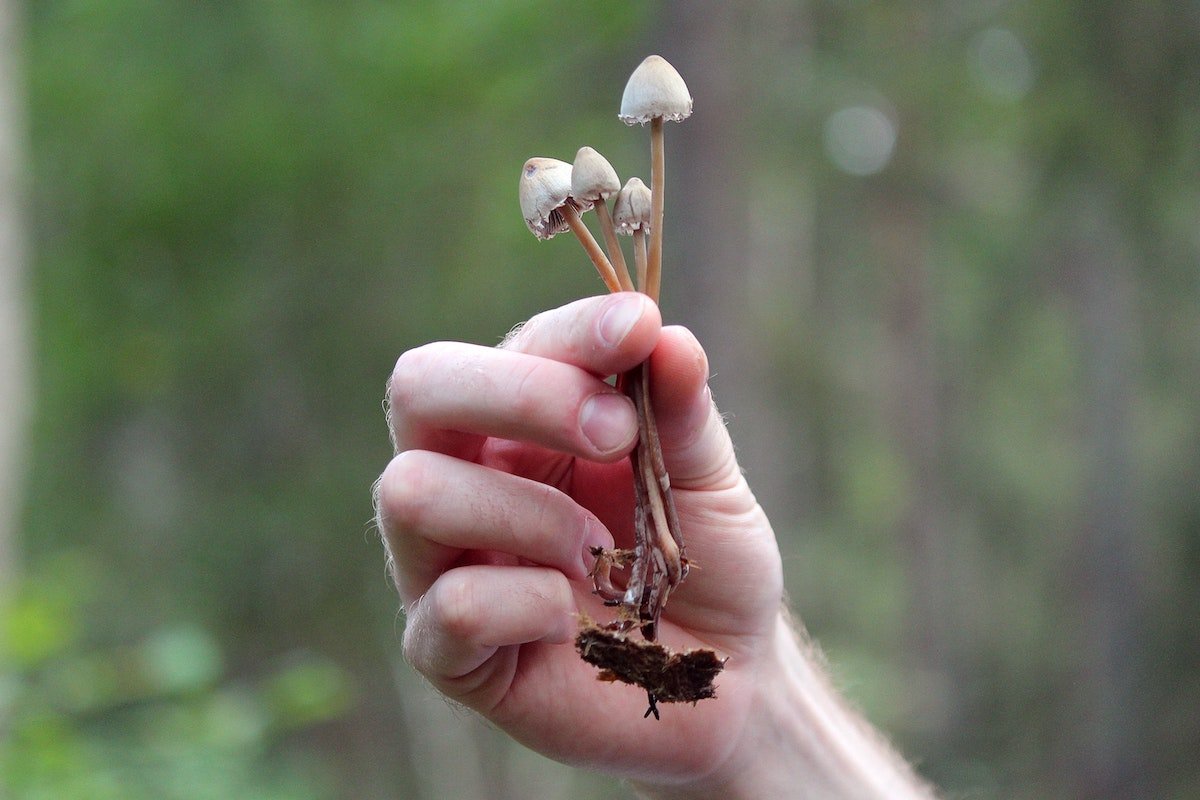
Photo by Heather Morse on Unsplash

Findings from a landmark survey have revealed that people with experience using psychedelics exhibited elevated psychological well-being during the COVID-19 pandemic.

Offering new insights into the potential benefits of psychedelics on mental well-being during the pandemic, the authors call for more research investigating psychedelics as tools for improving mental health. 

The study was carried out by ICEERS, Universitat Rovira i Virgili, the University of São Paulo at Ribeirão Preto and the Autonomous University of Madrid, and published in the journal Scientific Reports.

See also  Classical psychedelics could help with chronic pain

The international survey questioned participants on their lockdown experiences beginning in April 2020, finding that people with experience with psychedelics exhibited consistently elevated psychological well-being and registered lower scores on psychopathology scales.

This was true both during their initial assessment and in subsequent follow-up evaluations. 

The results also showed that individuals who were experiencing significant psychological distress exhibited noteworthy progress in post-traumatic growth. Additionally, survey participants who maintained a consistent pattern of psychedelic use had significantly higher post-traumatic growth scores despite generally scoring lower across all growth scales.

Lead researcher of the study, Dr José Carlos Bouso, commented: “The study serves as a timely contribution to the growing body of evidence supporting innovative mental health treatments.

“We need medical and cultural frameworks that not only effectively address mental health issues, but also help prevent them. 

“The clinical trials currently underway are focused on alleviating the disease, while our study explores the key consideration of prevention.”

The authors suggest the findings from the study have the potential to contribute to policy reform that allows for more extensive studies and therapeutic applications of psychedelic medicines.

Continue Reading
Click to comment

Leave a Reply

Your email address will not be published. Required fields are marked *

Evegreen

Psilocybin Shows Promise in Treating Obsessive-Compulsive Disorders: Is the Industry Getting Involved?

Published

on

A newly published systematic review titled on psilocybin’s effects on obsessive‑compulsive behaviours provides an up-to-date synthesis of research into the compound’s potential for treating OCD and related disorders. 

The study integrates findings from both animal models and early human trials, drawing attention to a consistent signal: reductions in obsessive or compulsive behaviours following psilocybin administration.

The review shows that in preclinical models (for example mice with altered grooming behaviours) psilocybin (or its active metabolite) produced marked reductions in compulsive-like behaviours, sometimes lasting beyond the immediate administration period. 

Clinically, although data remain limited, participants in early trials or case reports experienced rapid reductions in symptom severity (for example within hours or days) after single doses. The authors emphasise that while the mood-disorder applications of psilocybin are more advanced, this compulsive-behaviour indication is an important frontier.

In humans, single doses of psilocybin led to rapid symptom reductions. For example, in an open‑label study of nine treatment‑resistant OCD patients, reductions of 23 % to 100 % on the Y‑BOCS scale were recorded between 4 and 24 hours after dosing. A pilot trial in body dysmorphic disorder (a related OCRD) using a 25 mg psilocybin dose reported sustained improvements over 12 weeks in 58.3 % of participants. 

Mechanistically, the review highlights that psilocybin’s effects on compulsivity may not map exactly onto its classic psychedelic mechanism (5-HT₂A receptor activation). Some animal data suggest alternate or additional pathways (for instance 5-HT₇ receptor involvement, synaptic protein modulation) may underpin the anti-compulsive outcomes. The authors call for more robust, placebo-controlled human trials, ideally with neuroimaging and circuit-level biomarkers, to validate these early signals and clarify therapeutic protocols. 

The authors of the review emphasise that while the findings are promising, the evidence remains early stage. Key limitations include small clinical sample sizes, lack of placebo‑controls, short follow‑up intervals and heterogeneity in doses and models. They call for larger, double‑blind, placebo‑controlled trials incorporating neuroimaging of fronto‑striatal circuits, to more precisely map psilocybin’s effect in OCRDs. 

The authors propose that psilocybin may one day serve as a treatment for disorders characterised by repetitive, intrusive behaviours, not just mood disorders.

Are companies developing psilocybin-based treatments for OCD?

Several biotechnology companies are advancing psilocybin-based therapies for obsessive-compulsive disorder (OCD), signalling growing clinical interest in this area. 

Ceruvia Lifesciences has received U.S. FDA approval for an Investigational New Drug application to begin a Phase 2 trial using its synthetic psilocybin compound, SYNP-101, for OCD. The multicentre, randomised, double-blind, placebo-controlled study will administer a single oral dose and monitor participants for 12 weeks to assess symptom reduction, making it one of the most advanced OCD-focused psilocybin programmes.

Filament Health is developing PEX010, a botanical psilocybin drug exported to Israel for a trial investigating treatment-resistant OCD and PTSD.

MycoMedica Life Sciences lists OCD among its target indications, though its programmes remain early stage, while Compass Pathways is exploring broader psychiatric uses for COMP360, including potential applications in OCD.

Photo by Mélissa Jeanty on Unsplash.

Continue Reading

Markets & Industry

What Happens At A Legal Psychedelics Center? Psilocybin Clinic Publishes Real-World Data For The First Time

Published

on

For the first time, data from real-world application of psilocybin treatment under a regulated program was published by one of the Oregon clinics providing treatment.

In 2020, Oregon became the first U.S. state to legalize psilocybin for supervised therapeutic use when voters approved Measure 109. The law established a regulated framework for “psilocybin services” that include preparation, guided sessions, and integration support, administered at licensed service centers. The rollout has been gradual and cautious, given regulatory, safety, and infrastructure challenges. 

Until recently, much of what was known about psilocybin therapy outcomes came from controlled clinical trials; there was little insight into how the legal, real-world version would operate, who would access it, and whether the benefits observed in trials would translate to broader populations.

A fresh report by Osmind, one of the clinics providing the treatment, represent the first systematic look at real-world data emerging from Oregon’s legal psilocybin program under Measure 109, offering insights into demographics, motivations, safety, and self-reported mental health changes in participants.

Interested in learning more about psychedelic medicine? APPLY NOW to join PSYCH Symposium: London 2025, on December 4 at Conway Hall.

Who Is Accessing Psilocybin Services? 

From the “Real-World Evidence” report, data were gathered between March 2024 and April 2025 at a licensed service center in Central Oregon. Of 311 applicants, 88 individuals completed the baseline survey and became part of the analytic sample. 

Key demographic and background characteristics include:

  • Median age was 47 years; 62% female; 77% Caucasian; 63% holding a four-year college degree or more.
  • 16 % were veterans;  around 59% employed; 30% reported household income over $100K.
  • Prior experience: about 50% had used psychedelics before; about 50% were currently in counseling or therapy.

In terms of mental health, 61% identified depression as a primary concern, followed by anxiety (42%) and acute stress (24%). 

Many had complex, treatment-resistant histories and turned to psilocybin services after exhausting conventional options. Open-ended responses showed motivations spanning healing trauma, grief processing, managing obsessive or self-critical thoughts, and general desire for psychological insight or transformation.

This profile suggests that early adopters of Oregon’s program tend to be relatively educated, somewhat advantaged socioeconomically, and motivated by persistent mental health difficulties, not casual or recreational users. It also underscores gaps in diversity and access that future iterations of the program may need to address.

Outcomes, Safety & Changes in Mental Health Measures

The “Real-World Outcomes” report analyzed metrics across depression, anxiety, and subjective well-being using standardized tests to measure previous conditions and psychological state after the treatment in at a licensed service center. 

The findings were:

  • Depression (using the PHQ-8 scale): Mean reduction of 4.6 points, corresponding to a shift from moderate to mild severity
  • Anxiety (using the GAD-7 scale): Mean reduction of 4.8 points — a change exceeding commonly used clinical significance thresholds
  • Well-being (using the WHO-5 scale): Increase of 10.7 points, which is consistent with clinically meaningful improvement in mood and quality of life.

In terms of safety, there were no reportable serious adverse events in the 30-day follow-up period. 

However, about 3% of participants reported lingering negative effects (e.g. transient anxiety, existential distress, difficulties with family dynamics) at day 30.

These results mirror the direction of clinical trial evidence: meaningful decreases in depression and anxiety, and gains in well-being, but now observed in a legally regulated, real-world setting.

The Value of Real-World Evidence

These Osmind studies are groundbreaking because they offer the first empirical window into how a legalized psilocybin service model is functioning in practice. 

Clinical trials, while essential, often operate under narrow inclusion criteria, intensive controls, and short timeframes. They may not capture the full heterogeneity of “real-world” users, variations in implementation, or longer-term safety signals.

By contrast, these reports show how ordinary people (beyond trial populations) are using psilocybin services, what their motivations are, who they tend to be, and how their mental health measures shift in naturalistic settings. The absence of serious adverse events (in the short term) and the alignment of benefits with trial findings lend credibility to the possibility that psilocybin therapy could scale responsibly under regulation.

Furthermore, the data highlight access and equity issues (e.g. limited racial/ethnic diversity, relatively high socioeconomic status) that policymakers, providers, and regulators will need to contend with. As more jurisdictions consider legalizing or regulating psychedelics, having real-world evidence is critical for designing best practices, safety protocols, reimbursement models, and oversight. 

These early reports thus help close the gap between controlled trials and population-level rollout, and that alone makes them a major milestone in the evolving field of psychedelic medicine.

Picture by Photo by Timur Weber on Pexels.

Continue Reading

Medicinal

Royal College of Psychiatrists Calls for More Research into Psychedelics, Acknowledging Healing Potential

Published

on

On Friday, the Royal College of Psychiatrists has published a new report assessing the safety and efficacy of psychedelics and related substances as treatments for mental illness.

The College, which is the main professional organisation for psychiatrists in the United Kingdom, also issued guidance for clinical trials, emphasising that although early findings are promising, more robust evidence is needed before these substances can be adopted in routine psychiatric practice. 

Professor Owen Bowden-Jones, Registrar of the Royal College of Psychiatrists acknowledged the need for new treatments in the mental health space.

“New treatments are rarely developed for people with mental illness, whose needs are often overlooked, and it’s vital that this trend is reversed,” he said.

“That is why we are calling for further research into psychedelics as potential treatments for people with certain conditions, such as depression and PTSD, including those who are less responsive to other forms of care.” 

What is the Royal College of Psychiatrists and why its opinion matters

The RCPsych is the professional body responsible for psychiatry in the United Kingdom. It sets standards for psychiatric training, practice, education and research, accredits consultants and advises Government and regulatory bodies. Its judgements carry real weight for policy, clinical guidelines and funding. 

The College has previously issued comments on the use of psychedelics for mental health, but the Friday report marks the first comprehensive College-wide position on psychedelic and related substances for medical use.

What the report finds

The new RCPsych report reviews evidence for substances including LSD, psilocybin (also known as “magic mushrooms”), MDMA, ketamine, and others, both as standalone therapies and in combination with psychotherapy. Early studies suggest that these substances can have therapeutic potential in treating a range of mental disorders: anxiety disorders, depression, post-traumatic stress disorder (PTSD) and substance misuse.

The College concludes that, with the exception of ketamine (and esketamine, in certain cases), there is insufficient high-quality evidence to recommend these substances for routine clinical use. The report highlights gaps particularly in understanding long-term safety, risk profiles, and how best to integrate these treatments into existing therapeutic frameworks. 

Professor Oliver Howes, Chair of the College’s Psychopharmacology Committee, emphasised that the field is fast-moving, with risk of claims getting ahead of the evidence, and that more large, rigorous trials are needed.

Dr Jo O’Reilly, Chair of the Medical Psychotherapy Faculty, stressed the importance of the therapeutic relationship and proper supervision, noting that psychedelics can weaken psychological defences and bring forth traumatic material. Patients must be supported through preparation, during the altered state and through follow-up. 

“Psychedelics can have a profound effect on the mind and may make some people more responsive to psychotherapy. Patients often find their psychological defenses are lowered which allows traumatic and unpredictable material to emerge,” said Dr Jo O’Reilly.

The RCPsych acknowledging the therapeutic potential of psychedelics while insisting on more evidence marks a shift in the psychiatric field. It signals openness at high levels to new approaches, but also a strong insistence on scientific rigour, safety, and ethical oversight. 

Picture by Wikimedia Commons under Creative Commons license.


Continue Reading

Trending

Psychedelic Health is a journalist-led news site. Any views expressed by interviewees or commentators do not reflect our own. We do not provide medical advice or promote the personal use of psychedelic compounds. Please seek professional medical advice if you are concerned about any of the issues raised.

Copyright © 2025 PP Intelligence Ltd.