Connect with us

Research

Clinical trial to investigate psychedelic candidate for alcohol addiction

The manufacturing of the drug candidate has now been initiated. 

Published

on

Clinical trial to investigate psychedelic candidate alcohol addiction
Photo by Eeshan Garg on Unsplash

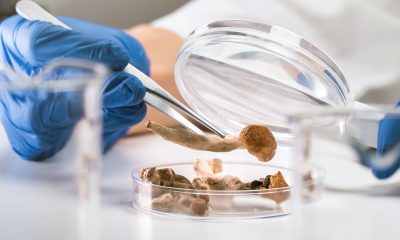
Clearmind Medicine will be embarking on a first-in-human clinical trial evaluating the proprietary drug candidate compound CMND-100 for the treatment of Alcohol Use Disorder (AUD).

The company has now begun the initiation of clinical batches of production of its novel psychedelic-derived drug candidate, the MEAI- based molecule- CMND-100.

Clearmind progressed MEAI through a preliminary drug development route with a number of studies and the company has stated that MEAI holds the promise to break vicious binge-drinking cycles by potentially innervating neural pathways such as 5-HT1A, which leads to decreased impulsivity and “sensible behaviour”.

See also  Trial approved in Finland investigating psilocybin for alcohol addiction

Following MEAI’s synthesis development process, the compound is being produced under GMP (Good Manufacturing Process) conditions to comply with FDA requirements. 

Clearmind’s Chief Executive Officer, Dr Adi Zuloff-Shani, commented: “Clearmind continues its progress toward FIH clinical trial.

”This milestone joins other achievements we’ve made in a relatively short period.  Non-clinical data generated to date, demonstrate that our MEAI- based treatment has the potential to treat broad range of addictions and binge behaviours such as AUD.

“Like other addictions, AUD is a chronic relapsing brain disorder characterised by an impaired ability to stop or control alcohol use. Alcohol abuse is the third most-common preventable cause of death in the United States, where almost 6% struggle with this condition.”

The clinical batches production is made possible due to prior successful production of MEAI drug substance that was used in the company’s pre- clinical studies designed to evaluate the safety of its innovative compound.

The company previously announced that it completed a highly constructive Pre-Investigational New Drug Application meeting with the U.S. FDA to discuss the development of CMND-100.

Continue Reading
Click to comment

Leave a Reply

Your email address will not be published. Required fields are marked *

Evegreen

Europe’s Regulatory Body Signals Shift To ‘Weight of Evidence’ Model For Drug Approvals—How Does It Affect Psychedelic Medicines?

Published

on

The European Medicines Agency is taking steps to rethink how certain high-need medicines reach patients, with a new concept paper proposing a more flexible, evidence-based pathway for cancer therapies. While the focus is paediatric oncology, the implications may extend far beyond cancer, raising questions about whether similar approaches could eventually support the development of psychedelic treatments.

The “Weight of Evidence” Model

Published last month, the EMA’s concept paper outlines plans for a reflection paper on how “proof-of-concept” data should be used to guide early-stage drug development. At its core is a shift away from rigid data requirements toward a “weight of evidence” model, where regulators assess the totality of available data, including non-clinical studies, early clinical signals, and biological rationale.

This approach is already gaining traction in oncology, particularly in paediatric settings where patient populations are small and traditional large-scale trials are often unfeasible. In such cases, regulators are increasingly willing to rely on mechanistic understanding and preclinical evidence to justify moving into clinical trials earlier, provided there is a strong scientific rationale and unmet medical need.

The EMA’s concept paper emphasises that development decisions should be grounded in several key domains, including mechanism of action, disease biology, pharmacology, and safety, as well as the broader clinical context. Rather than requiring exhaustive datasets upfront, the agency is signalling openness to iterative development, where evidence is built progressively and regulatory decisions evolve alongside the data.

For the psychedelics field, this raises a clear question: could a similar framework accelerate the path to approval?

A shift toward mechanism-of-action–based regulation in psychedelics could, in theory, reduce the need to pursue separate approvals for each diagnostic category, such as depression or PTSD, by anchoring use to a shared underlying biology.

If regulators accept that psychedelic therapies exert their primary effect through defined pathways, for example 5-HT2A receptor activation leading to increased neuroplasticity and network-level brain changes, then the relevant treatment population could be framed around patients exhibiting that dysfunction rather than a specific DSM label. In this model, a single approval could cover multiple conditions where the same mechanism is implicated, provided there is sufficient evidence linking that pathway to clinical benefit across those populations.

This would shift development away from duplicative, indication-by-indication trials toward demonstrating consistent mechanistic effects and reproducible outcomes in biologically defined subgroups.

There are other parallels between the regulatory paths described in the paper and psychedelics. Psychedelic therapies are often being developed for conditions where unmet need remains high and patient populations can be difficult to study using conventional trial designs. Like paediatric oncology, these indications may benefit from more flexible approaches that incorporate multiple forms of evidence.

However, important differences remain.

Oncology drug development is underpinned by well-established biological models and biomarkers, allowing regulators to link mechanism of action to clinical outcomes with a relatively high degree of confidence. In contrast, the mechanisms underlying psychedelic therapies are still being defined, spanning pharmacological effects, neural network changes, and the subjective therapeutic experience itself.

The EMA’s framework places significant weight on the relevance and reliability of non-clinical models, an area where psychedelics currently face limitations. Translating findings from animal studies to complex psychiatric outcomes in humans remains a challenge, and there is no widely accepted biomarker that can serve as a proxy for therapeutic response.

Endpoints also differ. Cancer trials can rely on objective measures such as tumour progression or survival, whereas psychedelic studies typically depend on subjective scales and patient-reported outcomes. This makes it more difficult to integrate different sources of evidence into a unified regulatory decision.

Even so, the direction of travel is notable. By formalising a weight-of-evidence approach and emphasising mechanism-driven development, the EMA is signalling greater flexibility in how innovative therapies are assessed. If these principles are applied more broadly across therapeutic areas, they could eventually lower some of the structural barriers facing psychedelic drug development.

For now, the concept paper remains focused on oncology, and significant scientific and regulatory hurdles would need to be addressed before such a model could be extended to psychedelics. But as regulators continue to adapt to emerging forms of medicine, the boundaries between therapeutic areas may become less rigid.

In that context, the EMA’s latest move may not just reshape cancer drug development, but also offer an early glimpse of how the next generation of psychiatric treatments could be evaluated.

Picture: EMA headquarters in Amsterdam. Courtesy of EMA.

Continue Reading

News

Quit Smoking: Psilocybin Found To Be 6 Times More Effective Than Nicotine Patches

Published

on

A new clinical trial has found that psilocybin-assisted therapy may be better at helping people stop smoking than standard nicotine replacement treatment.

The results were published on March 10, 2026 in the journal JAMA Network Open. Researchers from Johns Hopkins University and University of Alabama at Birmingham conducted a randomized clinical trial comparing a single psilocybin session combined with therapy to nicotine patch treatment with the same therapy program.

Smoking remains one of the leading causes of preventable disease and death worldwide. While existing treatments such as nicotine replacement therapy can help some people quit, long term success rates are often limited. The study aimed to test whether a psychedelic assisted approach could improve those outcomes.

The Trial

The trial included 82 adults who smoked tobacco daily and wanted to quit. Participants were randomly assigned to one of two groups. One group received a program built around a single high dose of psilocybin alongside structured psychological support. The other group received nicotine patches together with the same therapy sessions.

Both groups took part in a 13 week cognitive behavioral therapy program designed to help people stop smoking. This allowed researchers to compare the effect of psilocybin directly against the standard nicotine patch treatment while keeping the psychological support constant.

Participants in the psilocybin group took one oral dose of the compound, calculated at 30 milligrams per 70 kilograms of body weight. The session took place in a controlled setting with trained guides present. The experience was integrated into the broader therapy program, which included preparation sessions before the dose and follow up meetings afterwards.

Six months after treatment, the difference between the two groups was clear: around 40.5 percent of people who received psilocybin were able to remain abstinent from smoking. In the nicotine patch group, 10 percent achieved the same result.

This means that the group receiving psilocybin treatment was six times more likely to not pick up smoking at six months from the initial treatment date.

Researchers used biological tests to confirm whether participants had stopped smoking. These tests measured markers in breath and blood that indicate tobacco use. This approach allowed the team to verify the results rather than relying only on self reported behavior.

The authors note that smoking cessation is a difficult challenge for many people, even when treatment is available. Relapse is common, and many smokers attempt to quit several times before succeeding. The study suggests that psychedelic assisted therapy may offer a new approach by combining psychological support with a single powerful therapeutic experience.

However, the researchers also describe the trial as a pilot study. The relatively small number of participants means that larger studies will be needed to confirm the findings and better understand how the treatment works.

Several psilocybin therapies are advancing through the clinical pipeline regulated by the U.S. Food and Drug Administration. The most advanced programs target treatment resistant depression and major depressive disorder in late stage trials. Earlier studies are exploring psilocybin for post traumatic stress disorder, alcohol use disorder and anxiety or depression associated with life threatening illnesses.

If the results of the nicotine trail are replicated in larger trials, psilocybin assisted therapy could also become part of a new generation of treatments for tobacco dependence. The approach differs from traditional medications by focusing on psychological change during a guided therapeutic session rather than daily drug use.

For now, the study provides early clinical evidence that psilocybin combined with therapy may significantly improve smoking cessation outcomes compared with one of the most widely used existing treatments.

Image made using AI tools.

Continue Reading

Markets & Industry

FDA Grants Breakthrough Therapy Designation to The Psychedelic Luvesilocin for Postpartum Depression

Published

on

The U.S. Food and Drug Administration (FDA) has granted breakthrough therapy designation to psychedelic drug luvesilocin, from biopharmaceutical developer Reunion Neuroscience, for the treatment of postpartum depression. 

Luvesilocin is a recently-discovered proprietary psychedelic that can produce an acute subjective experience of around 3 to 4 hours shorter than that reported for some classic psychedelics such as LSD. 

It is the ninth psychedelic to receive breakthrough therapy designation by the agency, a qualification meant to to expedite the development and review of drugs that are intended to treat a serious or life-threatening condition, when preliminary clinical evidence shows that the drug could demonstrate a substantial improvement over available therapy. 

The Trial

Postpartum depression affects a substantial portion of people who have recently given birth. Globally, the condition is estimated to occur in roughly 10 % to 20 % of postpartum women.

According to the announcement from last week, Reunion’s clinical trial achieved its primary endpoint, showing a statistically significant reduction in depression seven days after administration.¡

Participants receiving a 30mg dose showed reductions in depressive symptoms as early as Day 1 that were maintained through Day 28 of follow-up, with 70 % of those patients in remission at both Day 7 and Day 28. 

With BTD status, luvesilocin is eligible for benefits associated with the FDA’s Fast Track program and will receive enhanced guidance and engagement with senior FDA leadership.

Reunion Neuroscience has said it plans to initiate a pivotal Phase 3 trial of luvesilocin in postpartum depression in 2026. The company is also enrolling patients in a Phase 2 trial for adjustment disorder related to cancer and other medical conditions, and anticipates beginning a Phase 2 trial in generalized anxiety disorder in early 2026.

What Luvesilocin Is and How It Works

Luvesilocin belongs to a class of molecules known as substituted tryptamines. 

Tryptamines are a family of compounds derived from the amino acid tryptophan, which includes endogenous neurotransmitters like serotonin, as well as classical psychedelic agents such as psilocin and DMT. Many structurally related molecules share the same backbone and interact with serotonin receptors, producing altered perceptions and changes in mood and cognition.

Chemically, luvesilocin is a prodrug of 4-HO-DiPT, meaning the compound is metabolised in the body to release the active serotonin receptor agonist, in a similar way to how psilocybin is metabolized into psilocin, which is the active ingredient producing a psychedelic effect in humans.

The active moiety of luvesilocin, 4-HO-DiPT, itself is part of this broader class and was described in the scientific literature as early as the late 1970s. It differs slightly in structure from psilocin (the active form of psilocybin), which may influence its receptor interactions and subjective effects. 

Unlike many classic psychedelics taken orally, luvesilocin is administered via subcutaneous injection, which contributes to its more predictable and shorter duration.

Continue Reading

Trending

Psychedelic Health is a journalist-led news site. Any views expressed by interviewees or commentators do not reflect our own. We do not provide medical advice or promote the personal use of psychedelic compounds. Please seek professional medical advice if you are concerned about any of the issues raised.

Copyright © 2025 PP Intelligence Ltd.