Connect with us

Research

HMNC aims to make ketamine treatment first-in-class for patients

The company hopes to improve access to ketamine treatment by delivering its therapies in at-home settings.

Published

on

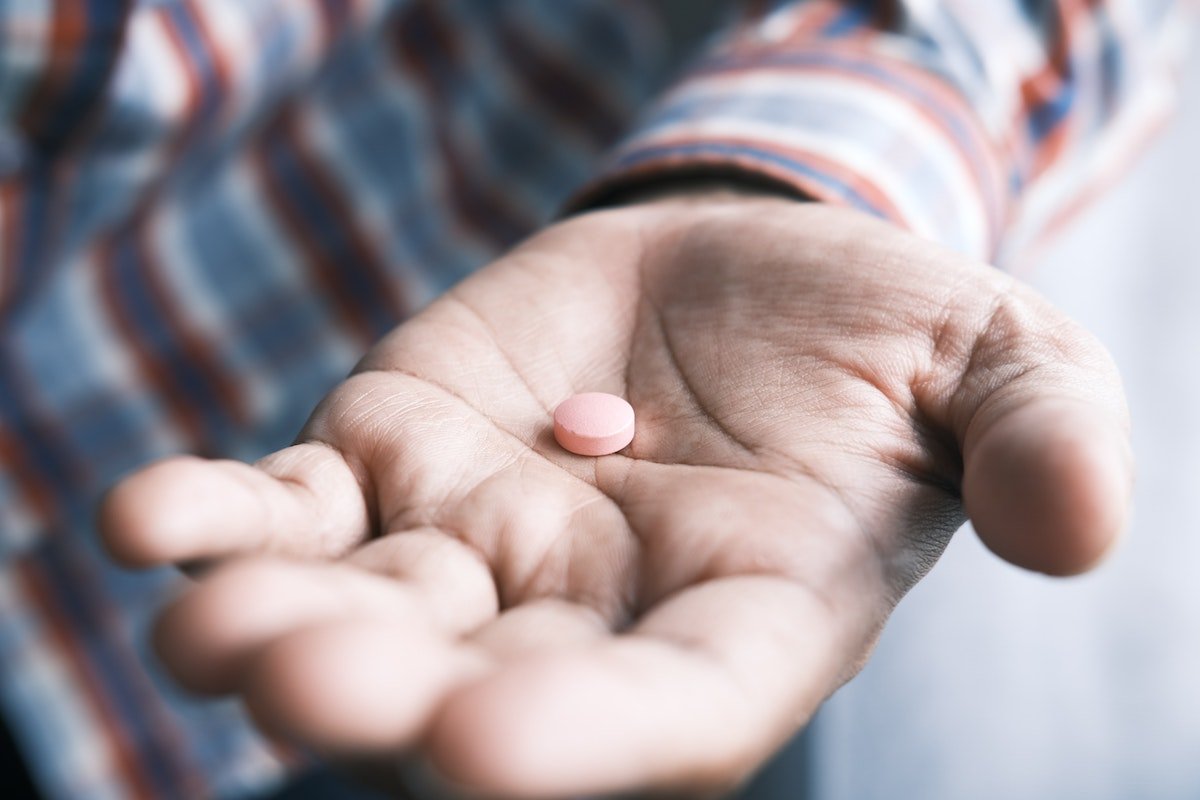
Photo by Towfiqu barbhuiya on Unsplash

Chief clinical development officer of HMNC Brain Health, Hans Eriksson, speaks to Psychedelic Health about how the company’s formula, ‘Ketabon’, will provide the therapeutic benefits of ketamine without the ‘trip.’

In June 2022, HMNC and Develco Pharma’s Phase 2 oral prolonged-release ketamine (Ketabon) Study dosed its first patient. The trial aims to understand if ketamine can help people living with treatment-resistant depression (TRD) who have not responded to a minimum of two standard antidepressants in their current major depressive episode. 

See also  HMNC: pioneering precision medicine for psychiatric care

Based on the data, HMNC believes the pharmacokinetic profile of its prolonged release Ketabon formulation could significantly improve tolerability and patient convenience by minimising dissociative effects compared with the currently applied intravenous and intranasal therapies.

Ketabon

HMNC’s proprietary formulation of ketamine is an oral formulation of ketamine that is taken up slowly by the body, with its concentration peaking at around six to eight hours.

The formulation, delivered in pill form, contains both enantiomers of ketamine – (S)-ketamine and (R)-ketamine – explains Eriksson.

“Since it’s taken orally, everything will essentially pass by the liver, so, quite a lot of the parent compound, ketamine – an active compound – is metabolised, as we get the relatively higher contribution of some of the downstream active metabolites,” said Eriksson. 

See also  Activating a stress circuit in the brain may improve ketamine treatment

“We believe that some of the advantages that we expect to find with Ketabon come from the pharmacokinetic properties, both the slow concentration buildup and also the relatively high first-pass metabolism.” 

In its Phase 1 study, results demonstrated that patients with chronic pain conditions that were exposed to this compound had good tolerability. 

A smaller Phase 2 study in treatment-resistant depression was conducted in an academic setting at the University of Zurich in Switzerland, although the study was terminated early due to difficulties in recruiting participants during the pandemic.

“This study still gave us lots of encouragement because we saw a clear signal of clinical efficacy,” said Eriksson. 

See also  Five-year study shows single ketamine dose reduces suicidal thoughts

With HMNC’s larger Phase 2 study underway, a clinical data readout is expected during the first half of next year. This study is being carried out with 117 patients in three different treatment arms as an add-on to standard antidepressant treatment in three countries in Europe. It is also being run as an outpatient study, which is not very usual for ketamine.

The first dose in the study is being given under medical supervision to ensure safety. While the study aims to demonstrate efficacy and safety, it is also an exploratory study, says Eriksson, as HMNC believes that three weeks may not be essential to achieve maximum efficacy. 

“We believe that sometime during the time after three weeks there will be maximum efficacy,” said Eriksson. “That’s probably the induction phase that we will use going forward as there is quite a lot of compelling evidence that maintenance treatment in individuals who have responded to ketamine, or (S)-ketamine, doesn’t have to be given on a daily basis.

“We can see that for instance with spravato [a nasal (S)-ketamine spray] and in many other regimens, where the frequency of dosing becomes lower and lower.” 

Ketamine without the trip

Ericsson says HMNC believes that its Ketabon formulation has a low likelihood of causing clinically significant dissociative side effects. 

Currently, whether or not the “trip” aspect of psychedelic therapy, and ketamine therapy, is necessary for clinical benefits is being debated. 

“For the dissociative effects of ketamine, I actually don’t think it’s absolutely needed,” said Eriksson. “In our small study in Switzerland, it was indeed possible to get an efficacy signal without dissociation. And there is also some data from academic studies out there looking at oral administration that look pretty encouraging. 

“Our hypothesis is that with the dose we have chosen, we will get the antidepressant efficacy, but we will not get the dissociative side effects. In our study, under the Clinician Administered Dissociative States Scale, which is one of the standard scales to look at dissociation – a common side effect of ketamine – the high dose of our drug was similar to the placebo.

“It was placebo level dissociation and there were also no signs of blood pressure increase, which is another typical consequence of giving ketamine intravenously or giving (S)-ketamine as a nasal spray.”

The company is aiming to develop the medication as a take-at-home medicine to over come the current challenges faced when delivering ketamine treatment. With IV ketamine treatment causing strong dissociative effects – patients must be treated in-clinic and supervised by a medical professional for a number of hours.

“I think there are two consequences of not having dissociative side effects,” said Eriksson. “One is that it will be good for patients, because many patients really disliked the dissociative experiences and they are quite unpredictable as well. 

“On a practical level, it will change things because if you’re taking a medicine like intranasal (S)-ketamine, which is a good medicine, you need to come into a physician’s office of the hospital several times during the treatment, once per week, twice per week and so on, and you need to stay there for several hours. 

“It’s really a complex treatment compared to if you can take the medicine at home. Our take-at-home approach has the potential to become a game changer for ketamine treatment.

“When you take psychedelic medicines that necessitate lots of staff and a controlled setting, meaning they become limited to a more severe end of the spectrum, which I think is natural. 

“If it will be possible to develop this medicine to something that gives efficacy with a very benign tolerability profile, then there is the potential to as a next step, continue developing the medicine for a broader use in psychiatric disorders, not necessarily only the treatment-resistant disorders.”

As Ketabon is an oral medication, Ericsson says HMNC will likely run a full effect study to find out whether the uptake is influenced by the food a patient is eating. 

So far, HMCN has spoken to several regulatory agencies and is aiming to take its treatment to the US and Europe, with development programmes designed to be fit for purpose for each market. 

“We believe that ketamine is a good antidepressant and that we can use Ketabon’s pharmacokinetic properties to disentangle the beneficial antidepressant effects from sometimes disturbing dissociative and cardiac effects,” Said Eriksson.

“That opens up the potential for a broader use of the medicine.”

Evegreen

Europe’s Regulatory Body Signals Shift To ‘Weight of Evidence’ Model For Drug Approvals—How Does It Affect Psychedelic Medicines?

Published

on

The European Medicines Agency is taking steps to rethink how certain high-need medicines reach patients, with a new concept paper proposing a more flexible, evidence-based pathway for cancer therapies. While the focus is paediatric oncology, the implications may extend far beyond cancer, raising questions about whether similar approaches could eventually support the development of psychedelic treatments.

The “Weight of Evidence” Model

Published last month, the EMA’s concept paper outlines plans for a reflection paper on how “proof-of-concept” data should be used to guide early-stage drug development. At its core is a shift away from rigid data requirements toward a “weight of evidence” model, where regulators assess the totality of available data, including non-clinical studies, early clinical signals, and biological rationale.

This approach is already gaining traction in oncology, particularly in paediatric settings where patient populations are small and traditional large-scale trials are often unfeasible. In such cases, regulators are increasingly willing to rely on mechanistic understanding and preclinical evidence to justify moving into clinical trials earlier, provided there is a strong scientific rationale and unmet medical need.

The EMA’s concept paper emphasises that development decisions should be grounded in several key domains, including mechanism of action, disease biology, pharmacology, and safety, as well as the broader clinical context. Rather than requiring exhaustive datasets upfront, the agency is signalling openness to iterative development, where evidence is built progressively and regulatory decisions evolve alongside the data.

For the psychedelics field, this raises a clear question: could a similar framework accelerate the path to approval?

A shift toward mechanism-of-action–based regulation in psychedelics could, in theory, reduce the need to pursue separate approvals for each diagnostic category, such as depression or PTSD, by anchoring use to a shared underlying biology.

If regulators accept that psychedelic therapies exert their primary effect through defined pathways, for example 5-HT2A receptor activation leading to increased neuroplasticity and network-level brain changes, then the relevant treatment population could be framed around patients exhibiting that dysfunction rather than a specific DSM label. In this model, a single approval could cover multiple conditions where the same mechanism is implicated, provided there is sufficient evidence linking that pathway to clinical benefit across those populations.

This would shift development away from duplicative, indication-by-indication trials toward demonstrating consistent mechanistic effects and reproducible outcomes in biologically defined subgroups.

There are other parallels between the regulatory paths described in the paper and psychedelics. Psychedelic therapies are often being developed for conditions where unmet need remains high and patient populations can be difficult to study using conventional trial designs. Like paediatric oncology, these indications may benefit from more flexible approaches that incorporate multiple forms of evidence.

However, important differences remain.

Oncology drug development is underpinned by well-established biological models and biomarkers, allowing regulators to link mechanism of action to clinical outcomes with a relatively high degree of confidence. In contrast, the mechanisms underlying psychedelic therapies are still being defined, spanning pharmacological effects, neural network changes, and the subjective therapeutic experience itself.

The EMA’s framework places significant weight on the relevance and reliability of non-clinical models, an area where psychedelics currently face limitations. Translating findings from animal studies to complex psychiatric outcomes in humans remains a challenge, and there is no widely accepted biomarker that can serve as a proxy for therapeutic response.

Endpoints also differ. Cancer trials can rely on objective measures such as tumour progression or survival, whereas psychedelic studies typically depend on subjective scales and patient-reported outcomes. This makes it more difficult to integrate different sources of evidence into a unified regulatory decision.

Even so, the direction of travel is notable. By formalising a weight-of-evidence approach and emphasising mechanism-driven development, the EMA is signalling greater flexibility in how innovative therapies are assessed. If these principles are applied more broadly across therapeutic areas, they could eventually lower some of the structural barriers facing psychedelic drug development.

For now, the concept paper remains focused on oncology, and significant scientific and regulatory hurdles would need to be addressed before such a model could be extended to psychedelics. But as regulators continue to adapt to emerging forms of medicine, the boundaries between therapeutic areas may become less rigid.

In that context, the EMA’s latest move may not just reshape cancer drug development, but also offer an early glimpse of how the next generation of psychiatric treatments could be evaluated.

Picture: EMA headquarters in Amsterdam. Courtesy of EMA.

Continue Reading

News

Quit Smoking: Psilocybin Found To Be 6 Times More Effective Than Nicotine Patches

Published

on

A new clinical trial has found that psilocybin-assisted therapy may be better at helping people stop smoking than standard nicotine replacement treatment.

The results were published on March 10, 2026 in the journal JAMA Network Open. Researchers from Johns Hopkins University and University of Alabama at Birmingham conducted a randomized clinical trial comparing a single psilocybin session combined with therapy to nicotine patch treatment with the same therapy program.

Smoking remains one of the leading causes of preventable disease and death worldwide. While existing treatments such as nicotine replacement therapy can help some people quit, long term success rates are often limited. The study aimed to test whether a psychedelic assisted approach could improve those outcomes.

The Trial

The trial included 82 adults who smoked tobacco daily and wanted to quit. Participants were randomly assigned to one of two groups. One group received a program built around a single high dose of psilocybin alongside structured psychological support. The other group received nicotine patches together with the same therapy sessions.

Both groups took part in a 13 week cognitive behavioral therapy program designed to help people stop smoking. This allowed researchers to compare the effect of psilocybin directly against the standard nicotine patch treatment while keeping the psychological support constant.

Participants in the psilocybin group took one oral dose of the compound, calculated at 30 milligrams per 70 kilograms of body weight. The session took place in a controlled setting with trained guides present. The experience was integrated into the broader therapy program, which included preparation sessions before the dose and follow up meetings afterwards.

Six months after treatment, the difference between the two groups was clear: around 40.5 percent of people who received psilocybin were able to remain abstinent from smoking. In the nicotine patch group, 10 percent achieved the same result.

This means that the group receiving psilocybin treatment was six times more likely to not pick up smoking at six months from the initial treatment date.

Researchers used biological tests to confirm whether participants had stopped smoking. These tests measured markers in breath and blood that indicate tobacco use. This approach allowed the team to verify the results rather than relying only on self reported behavior.

The authors note that smoking cessation is a difficult challenge for many people, even when treatment is available. Relapse is common, and many smokers attempt to quit several times before succeeding. The study suggests that psychedelic assisted therapy may offer a new approach by combining psychological support with a single powerful therapeutic experience.

However, the researchers also describe the trial as a pilot study. The relatively small number of participants means that larger studies will be needed to confirm the findings and better understand how the treatment works.

Several psilocybin therapies are advancing through the clinical pipeline regulated by the U.S. Food and Drug Administration. The most advanced programs target treatment resistant depression and major depressive disorder in late stage trials. Earlier studies are exploring psilocybin for post traumatic stress disorder, alcohol use disorder and anxiety or depression associated with life threatening illnesses.

If the results of the nicotine trail are replicated in larger trials, psilocybin assisted therapy could also become part of a new generation of treatments for tobacco dependence. The approach differs from traditional medications by focusing on psychological change during a guided therapeutic session rather than daily drug use.

For now, the study provides early clinical evidence that psilocybin combined with therapy may significantly improve smoking cessation outcomes compared with one of the most widely used existing treatments.

Image made using AI tools.

Continue Reading

Markets & Industry

FDA Grants Breakthrough Therapy Designation to The Psychedelic Luvesilocin for Postpartum Depression

Published

on

The U.S. Food and Drug Administration (FDA) has granted breakthrough therapy designation to psychedelic drug luvesilocin, from biopharmaceutical developer Reunion Neuroscience, for the treatment of postpartum depression. 

Luvesilocin is a recently-discovered proprietary psychedelic that can produce an acute subjective experience of around 3 to 4 hours shorter than that reported for some classic psychedelics such as LSD. 

It is the ninth psychedelic to receive breakthrough therapy designation by the agency, a qualification meant to to expedite the development and review of drugs that are intended to treat a serious or life-threatening condition, when preliminary clinical evidence shows that the drug could demonstrate a substantial improvement over available therapy. 

The Trial

Postpartum depression affects a substantial portion of people who have recently given birth. Globally, the condition is estimated to occur in roughly 10 % to 20 % of postpartum women.

According to the announcement from last week, Reunion’s clinical trial achieved its primary endpoint, showing a statistically significant reduction in depression seven days after administration.¡

Participants receiving a 30mg dose showed reductions in depressive symptoms as early as Day 1 that were maintained through Day 28 of follow-up, with 70 % of those patients in remission at both Day 7 and Day 28. 

With BTD status, luvesilocin is eligible for benefits associated with the FDA’s Fast Track program and will receive enhanced guidance and engagement with senior FDA leadership.

Reunion Neuroscience has said it plans to initiate a pivotal Phase 3 trial of luvesilocin in postpartum depression in 2026. The company is also enrolling patients in a Phase 2 trial for adjustment disorder related to cancer and other medical conditions, and anticipates beginning a Phase 2 trial in generalized anxiety disorder in early 2026.

What Luvesilocin Is and How It Works

Luvesilocin belongs to a class of molecules known as substituted tryptamines. 

Tryptamines are a family of compounds derived from the amino acid tryptophan, which includes endogenous neurotransmitters like serotonin, as well as classical psychedelic agents such as psilocin and DMT. Many structurally related molecules share the same backbone and interact with serotonin receptors, producing altered perceptions and changes in mood and cognition.

Chemically, luvesilocin is a prodrug of 4-HO-DiPT, meaning the compound is metabolised in the body to release the active serotonin receptor agonist, in a similar way to how psilocybin is metabolized into psilocin, which is the active ingredient producing a psychedelic effect in humans.

The active moiety of luvesilocin, 4-HO-DiPT, itself is part of this broader class and was described in the scientific literature as early as the late 1970s. It differs slightly in structure from psilocin (the active form of psilocybin), which may influence its receptor interactions and subjective effects. 

Unlike many classic psychedelics taken orally, luvesilocin is administered via subcutaneous injection, which contributes to its more predictable and shorter duration.

Continue Reading

Trending

Psychedelic Health is a journalist-led news site. Any views expressed by interviewees or commentators do not reflect our own. We do not provide medical advice or promote the personal use of psychedelic compounds. Please seek professional medical advice if you are concerned about any of the issues raised.

Copyright © 2025 PP Intelligence Ltd.