Connect with us

Insight

Marley One mushrooms to hit UK market through distribution agreement

Published

on

Marley One mushrooms to hit UK market through distribution agreement

Psychedelics company Silo Wellness has today announced a UK distribution partnership for its Marley One functional mushroom products.

Silo Wellness has agreed on the exclusive distribution partnership with LocoSoco Group for its Marley One functional mushroom range, the first global functional and psychedelic mushroom consumer brand, created in collaboration with the family of legendary musician Bob Marley. 

Silo Wellness, which has operations in Jamaica and Oregon, and which launched the world’s first psilocybin nasal spray, is the first global psychedelics company to access the nationwide network of a large-scale distributor to reach consumers across the UK at mainstream retail stores. 

Functional mushrooms for the UK

LocoSoco will distribute the full line of Marley One mushroom products, beginning with the brand’s initial five functional mushroom tinctures, to independent retailers, buying groups, health food stores, online retailers and influencers and their e-commerce affiliates, across the UK. 

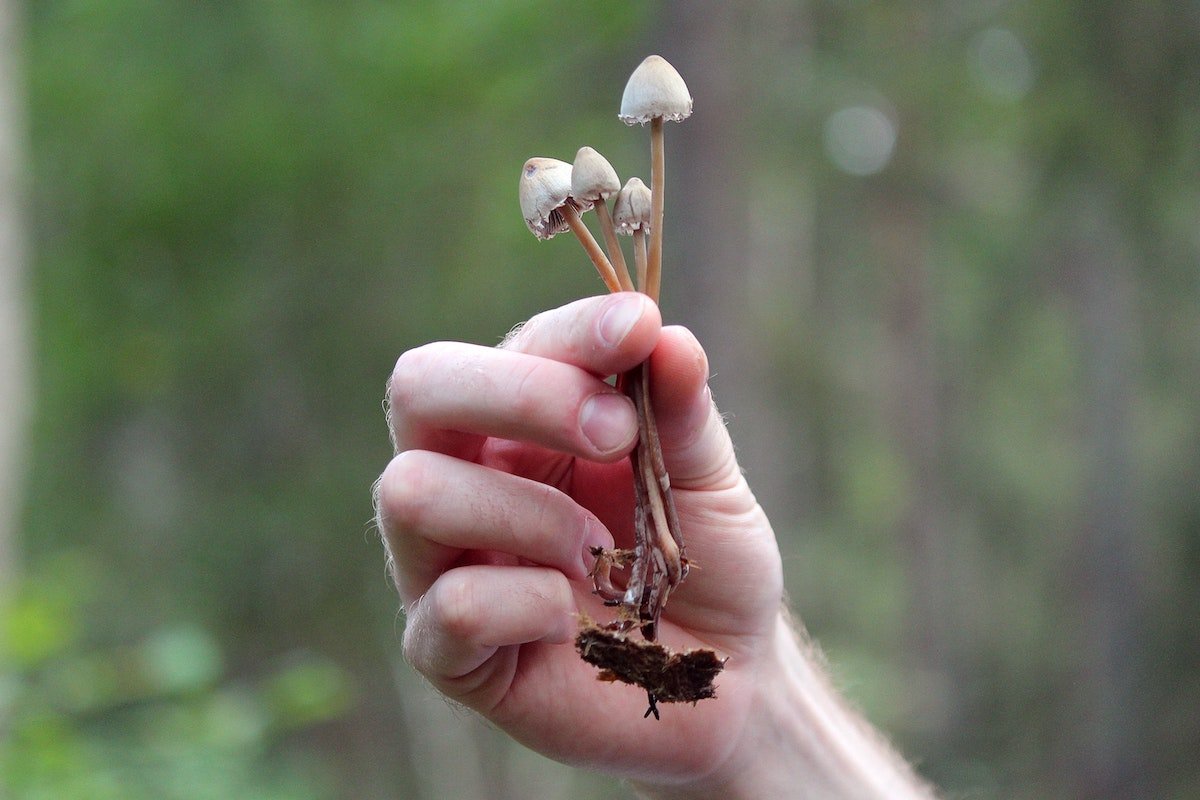
The initial Marley One mushroom products is a range of functional mushroom tinctures with unique blends highlighting the brand’s connection to Jamaica, including  species such as cordyceps, lion’s mane, chaga, reishi and turkey tail.

Silo Wellness CEO Douglas K. Gordon, said: “Since the launch of Marley One, we’ve been vetting potential partners to help us bring the powerful health and wellness benefits of functional mushrooms to the UK, where consumer interest in these products is on the rise, and psychedelic products as regulations allows.

“In LocoSoco, we’ve found a uniquely structured distribution network and like-minded collaborator who shares not only our dynamic vision for the mushroom category but also our principles around community building and value sharing at every point in the supply chain. We think the industry at large will benefit from the synergies of these two established, publicly-traded companies working in sync.”

See also  Nine ways to integrate the psychedelic experience for lasting change

Speaking to Psychedelic Health Gordon added: “We partnered with LocoSoco which reaches a number of independent retails in particular, but they also have some very interesting and innovative approaches to distribution, and they as an enterprise are very green and sustainable. They believe in doing the right thing – so, for us it was a very great fit, not just because commercially we want to reach all of the right outlets in the UK but also because we want to do it with an enterprise that places a value on how we do business. We are very exited about what that looks like. 

“First we are going to be online – SocoLoco are very positive and motivated and we feel this is going to do extremely well in the market.”

James Perry, Founder and Chief Executive Officer of LocoSoco, said: “We are thrilled to align with Silo Wellness, a company catalysing growth in the burgeoning functional mushroom industry, to build a strategic route to market for their iconic Marley One product portfolio.

“We are extremely selective with who we choose to partner with, and we’re proud to leverage our unique network of local and independent retailers to support a future-thinking, sustainable and ethical brand like Marley One in gaining access to consumers and communities across the UK.”

Silo Wellness will also be launching a psychedelic mushroom product line under the Marley name later this year, to be followed by additional functional mushroom products including gummies, capsules and cosmetics.

Continue Reading
Click to comment

Leave a Reply

Your email address will not be published. Required fields are marked *

Insight

Is Ketamine Therapy Only Reaching The Wealthy? Dr. Celia Morgan On Expanding Equitable Access

Published

on

Dr. Celia Morgan is one of the UK’s leading figures in ketamine and psychedelic research, especially in the domain of addiction and mental health.

Based at the University of Exeter, she holds the Chair of Psychopharmacology and leads trials exploring how ketamine, paired with psychotherapy, can break cycles of relapse in substance misuse.

Morgan has led some of the largest clinical trials on ketamine-assisted therapy for alcohol use disorder and will be speaking at the upcoming PSYCH Symposium: London 2025, to be held at Conway Hall on December 4.

“I think that the most promising findings from our work with ketamine are of the sense of agency and autonomy in their recovery that the people we are working with experience,” she told Psychedelic Health in a written interview.

Still, she thinks several key challenges need to be tackled for these treatments to be able to reach more people. One of the biggest of such challenges is ensuring equitable access to these treatments.

“We see a relatively homogenous and privileged group in most studies, our work has tried to address this,” she said.

Building the infrastructure to safely deliver these treatments in public healthcare systems is another big challenge for the industry, she said.

Yet the healthcare sector can also take advantage of Ketamine’s regulated status to allow for a faster roll-out, when compared to other psychedelics like MDMA or psilocybin.

“Some of the recent recommendations by the Royal College fo Psychiatrists are steps on the way towards more widespread use,” she said.

See also  Integrating psychedelics into all fields of medicine 

What distinguishes Morgan in the psychedelics field is her dual commitment. She studies the risks and harms of recreational ketamine use while simultaneously designing controlled, clinical applications for it.

One of her flagship projects is Exeter’s KARE trial (Ketamine for Reduction of Alcohol Relapse), which blends ketamine infusions with psychotherapy for patients with alcohol use disorder. Early published data show dramatic improvements in abstinence rates during six-month follow-ups, far exceeding baseline relapse rates. Morgan has also worked on trials for gambling disorder and other behavioral addictions, expanding the frontier of what ketamine-assisted therapy might treat.

Morgan also plays a role in academia’s response to the psychedelic renaissance, she’s a co-lead on Exeter’s postgraduate certificate in psychedelic studies, a program designed to train clinicians, researchers, and therapists in the science and ethics of psychedelic medicine.

“I think its important to keep on with our efforts to study, regulate and roll out these treatments principally for the patients who might benefit from psychedelics as I have seen first hand in my work,” she said.

Picture is extracted from an interview with Dr. Morgan at PSYCH Symposium’s 2022 edition.

Continue Reading

Evegreen

Did Psychedelics Influence Early Christianity? A New Review Examines the Evidence

Published

on

A newly published academic review has revisited one of the most sensational — and disputed — theories in psychedelic history: that early Christianity emerged from fertility cults using psychoactive mushrooms.

Released 9 August in the journal Religions, Richard S. Ascough’s paper, John Allegro and the Psychedelic Mysteries Hypothesis, takes a fresh look at the 1970 book The Sacred Mushroom and the Cross by Semitic philologist John M. Allegro.

Allegro claimed that Christian theology, symbols and even the figure of Jesus could be traced back to ancient rituals involving the psychoactive mushroom Amanita muscaria. His argument rested on bold linguistic links between Sumerian and Semitic languages — links that experts swiftly dismissed as unsubstantiated.

Discredited but enduring

Ascough’s review details how Allegro’s thesis was rejected almost immediately in academic circles. Mainstream scholars pointed out that Sumerian is a language isolate, making the connections Allegro proposed linguistically impossible. The fallout was severe — the book damaged Allegro’s reputation and ended his academic career.

Yet, as Ascough points out, the theory refused to disappear. In the decades since, it has surfaced repeatedly in psychedelic counterculture, cited by authors such as Carl Ruck and Terence McKenna. While scholars abandoned the thesis, parts of the public embraced it as part of a broader fascination with the potential spiritual role of entheogens.

Three key takeaways

Ascough distils his reassessment into three main findings:

  • Reception – Universally dismissed by academics, the theory nonetheless gained a cult following in popular psychedelic discourse.

  • Methodology – Allegro’s linguistic analysis is fundamentally flawed; modern scholarship offers no evidence for the deep language connections he claimed.

  • Legacy – The thesis’ real impact lies in how it helped spark public interest in the idea that psychoactive substances may have shaped religious traditions.

In short, Ascough frames Allegro’s work as “a historical curiosity” — important for its cultural footprint but not as a credible piece of entheogenic research.

Why it matters now

The review lands at a time when psychedelics are being investigated for regulated medical use in treating depression, PTSD, and end-of-life anxiety. By separating historical speculation from scientific evidence, Ascough’s work helps keep the conversation grounded.

It also highlights a longer lineage of public fascination with psychedelics — one that stretches from ancient myth to 20th-century counterculture, and now into 21st-century clinics and labs.

For those following the evolution of psychedelic medicine, the review is both a look back at one of the field’s most colourful controversies and a reminder of how far the evidence base has advanced.

Article picture is an illustration made using generative AI tools.

See also  New findings on how ketamine prevents depression raise treatment hope
Continue Reading

Insight

Psychedelic-assisted therapy for treating PTSD in Ukraine brings hope

Published

on

Photo by Karollyne Videira Hubert on Unsplash

The war in Ukraine brings suffering and trauma, which naturally leads to cases of post-traumatic stress disorder (PTSD) among soldiers and civilians. The Ministry of Health of Ukraine predicts that about 4 million Ukrainian civilians are suffering from PTSD.

According to the WHO, about a quarter of the Ukrainian population may be affected by disorders of mental health. In order to deal with this challenge, Ukraine must ensure access to safe, effective and adequately regulated therapy.

That is also why Ukraine is trying to support the idea that mental health will become an integral part of Ukraine’s “reconstruction.” Czech Republic can in this regard offer a helping hand in the sphere of innovative therapy. That is also one of the reasons why a Ukrainian delegation took part in the international conference Novel Mental Health Treatments and Sustainability of Healthcare Systems: Czechia as a Leader of the EU? which took place in Prague.

Psychedelic-assisted therapy is being increasingly discussed in Ukraine as a way of treating PTSD. Although the use of ketamine as part of mental illness treatment has been legal since 2017, substances such as MDMA and psilocybin are still banned. With a view to global development, which has been inching towards supporting the medical use of psychedelics, Ukrainian institutions are supporting clinical studies for psychedelic-assisted therapy as an innovative way of treating PTSD.

Medical use of psychedelics in PTSD treatment in Ukraine

The potential of psychedelic-assisted therapy in the context of the war in Ukraine was also the focus of one of the conference panels. The panel was attended by Ukrainian MPs Mykhailo Radutskyi, Dmytro Gurin, Rostyslav Tistyk and State Secretary of the Ministry of Internal Affairs Inna Yashchuk.

Over the course of the day, Mykhailo Radutskyi, Member of the Verkhovna Rada of the Parliament of Ukraine and Chairman of the Committee on National Health, Health Care and Health Insurance praised the Czech Republic and said that the country is at the forefront of psychedelic research in Europe.

See also  EMA workshop: One small step for Europe, one giant leap for psychedelics

“We have a large population suffering from mental health problems, but we will most likely never have enough experts. In Ukraine, we have an information campaign on how to treat soldiers who have returned from the front, and we are proposing a law which would ensure mental health,” Radutskyi stated.

“About 3.5 million people in Ukraine, and not only soldiers and veterans, currently have mental health problems because of the war, over a million war veterans will need psychotherapeutic help, and currently about half of the veterans suffer from PTSD,” said Dmytro Gurin, Ukrainian MP and member of the Committee on National Health, Health Care and Health Insurance.

“Mental health must become an issue and must play a part in the reconstruction of Ukraine. Winning the war is one thing, but we must also win the war on mental health. One way to win this war is through psychedelic-assisted therapy, and our Parliament and the Ministry of Health will support clinical trials.

“I hope that we will soon approve a study researching the potential for treating PTSD through psychedelic-assisted therapy. Our task is to create fitting conditions for future clinical trials.”

State Secretary of the Ministry of Internal Affairs Inna Yashchuk said: “The Ministry of Internal Affairs is setting up mental health centers all over Ukraine, and I estimate that when we win, 80 % of the people will come to their doctors in need of psychological and psychiatric help. So mental health is not a problem today, but it will be a problem for the future.”

Czech Republic wants to help Ukraine with mental health issues

The event also featured a speech by the Governmental Envoy for the Reconstruction of Ukraine, Tomáš Kopečný, who said: “Ukraine’s reconstruction is not only about physical reconstruction, but also about the mental health of Ukrainian civilians and war veterans, it is about increasing capacities on site, so that the support reach is as effective as possible.”

Other experts also believe that one of the outcomes of the panel discussion should consist in the establishment of a structural relationship between the Czech Republic and Ukraine in the field of mental health, which would include scientific cooperation, exchange of know-how and joint research projects.

Scientific supervision of the ongoing exchange between Czechia and Ukraine in the field of mental health is primarily provided by Professor Jiří Horáček of the Faculty of Medicine at Charles University and director of the Centre for Advanced Studies of Brain and Consciousness at the National Institute of Mental Health, who has prepared an innovative clinical study of using ketamine for the treatment of PTSD in Ukrainian veterans.

In Czech Republic, the topic is also addressed by the Psychedelic Research Foundation (PSYRES). Its director, Jana Bednářová, has said that: “Research about psychedelics is crucial for the future of Ukraine and the Czech Republic. While such research will put Czech Republic on the cutting edge of the field in Europe, without breakthrough solutions for Ukraine, it can take an entire generation to regenerate mental health – in comparison, the physical recovery of the country can be a matter of mere years. Our mission is to enlist visionaries, philanthropists, organizations and the general public to support our research projects and activities and help us make treatment available to everyone who may need it.”

The issue has been resonating in Brussels, Czechia among EU leaders in mental health

The Czech Republic was the first country to put mental health back on the EU’s agenda. The Czech trial in Brussels also leads to the topic of psychedelic-assisted therapy in the treatment of PTSD in Ukraine. The topic was first addressed last year by PsychedelicsEUROPE, a platform focussing on the European regulation of psychedelics. The platform has long been working towards the approval of a new regulatory framework for the medical use of psychedelics on the European single market.

“Mental health is becoming a central issue for the EU. We are a little behind the US, the UK and Australia, but the necessary debate about the regulation of psychedelic substances is coming to Europe. In the same way that psychedelic-assisted therapy can help Ukraine, Ukraine can help the EU in this field by providing data from new research which may help with drafting good legislation. This is one of the reasons why mental health ought to be an implicit part of Ukraine’s reconstruction,” said Viktor Chvátal, founder of PsychedelicsEUROPE.

The event was organised by:

PSYRES
The mission of PSYRES, the Psychedelic Research Endowment Fund, is to provide funding to scientific projects and facilities that focus on innovative treatment procedures in the field of mental illnesses. Our task is to support research and study of the potential of psychedelics and their therapeutic use in psychiatry, neurology and addictology. Our activities help with the preparation and implementation of clinical studies and analyses and with the education of the public. We collaborate with doctors, therapists and researchers who deal in depth with altered states of human consciousness.

INSTITUTE FOR RATIONAL ADDICTION POLICIES
Institute for Rational Addiction Policies is a multidisciplinary association of independent and prominent experts who address the issue of addiction from all angles – public and individual health, legislation and other legal implications, including security challenges, and economics including market modeling, tax, economic impacts on public budgets, the field of education and prevention, and finally also the fields of social and sociological and political science.

PSYCHEDELICS EUROPE
PsychedelicsEUROPE (PE) is an innovative public affairs mental health platform based in Brussels that brings together leading research centres, NGOs, investors, philanthropists and private companies. Based on the latest scientific evidence, PE advocate in the EU for a regulatory environment that promotes modern therapies, cutting-edge research, and innovative industry.

Continue Reading

Trending

Psychedelic Health is a journalist-led news site. Any views expressed by interviewees or commentators do not reflect our own. We do not provide medical advice or promote the personal use of psychedelic compounds. Please seek professional medical advice if you are concerned about any of the issues raised.

Copyright © 2025 PP Intelligence Ltd.