
Connect with us

Medicinal

Canada’s SAP patients to receive Blue Serenity psilocybin

Published

on

Canada’s SAP patients to receive Blue Serenity psilocybin

Optimi Health has launched Blue Serenity – Canada’s first natural therapeutic psilocybin product, in collaboration with psilocybin patient advocate Thomas Hartle.

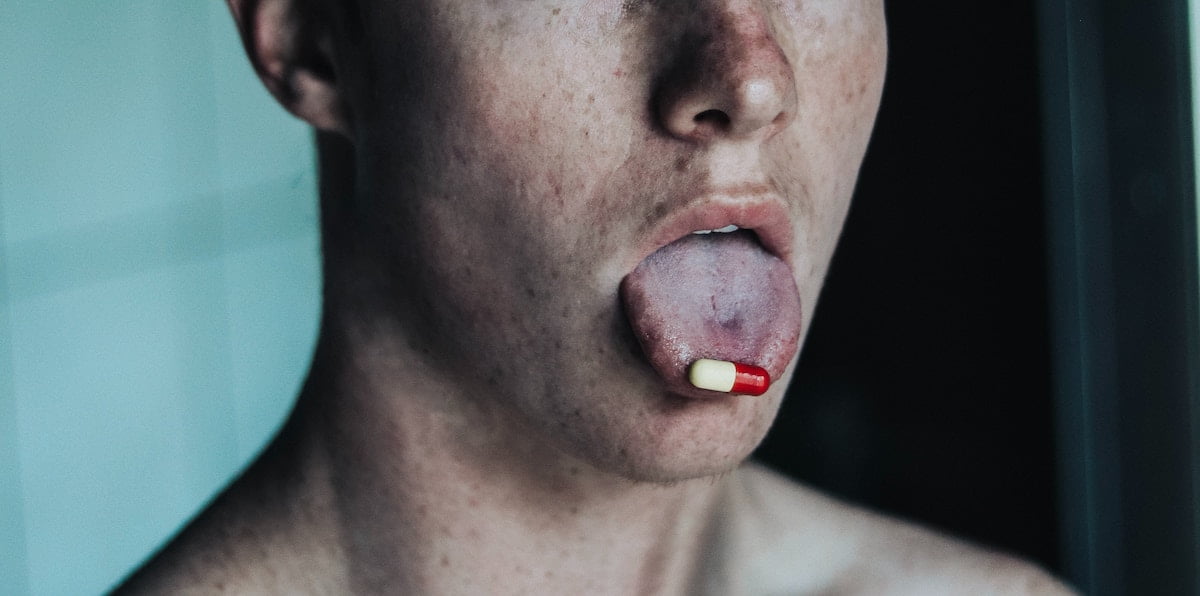
Once approved by health authorities under Canada’s Special Access Program (SAP) or an authorized clinical trial, patients, doctors, and researchers will receive Blue Serenity in blister packs of eight psilocybin capsules.

Blue Serenity is standardised to contain a total of 25 milligrams of natural psilocybin in the form of EU-GMP biomass grown as Panaeolus cyanescens mushrooms cultivated at Optimi Labs Inc. in Princeton, British Columbia. 

See also  Brain activity in depressed people increases following psilocybin use

Optimi’s Chief Science Officer, Justin Kirkland, and Head of Cultivation, Todd Henderson, collaborated with Hartle to breed a specific genetic strain based on Hartle’s previous therapeutic experiences.

Optimi CEO, Bill Ciprick, commented: “Anyone who has entered the psychedelics space in the last two years will tell you that Thomas Hartle’s story of compassion and kindness inspired them in some way to want to make a difference.

“We are tremendously excited to be partnering with Thomas to become the first Canadian company to launch a natural psilocybin product specifically to help patients seeking relief through the Special Access Program.”

Proceeds from the sale of Blue Serenity will directly benefit psilocybin patients through Hartle’s new charity, a venture that will provide access to psilocybin therapy for underserved adults. 

Optimi will also make a $5,000 monetary donation to the charity in commemoration of the two-year anniversary of Hartle’s Health Canada approval to undergo psilocybin-assisted therapy.

Ciprick said: “It’s an excellent opportunity for Optimi to give back to those in need, while helping to build a network of trust between business, advocacy, patients, and doctors, that we hope will further the framework for compliant access and increase the overall confidence of practitioners in this medicine.”

Optimi Health has explained that Hartle’s choice of the name “Blue Serenity” touches on the emotional and visual aspect of his psilocybin experience, specifically in how he was able to redefine the inner sense of peace his therapy brought him.

Hartle said: “Blue Serenity was born from an experience that took me from a state of extreme anxiety to a feeling of calm that I never knew existed.

“Knowing that my journey will live on in a natural substance that others will be able to access goes to the core of everything that is right about psychedelic therapy, and that in itself is an incredibly moving experience for me.”

[activecampaign form=52]

Markets & Industry

Netflix Premieres New Documentary on Ibogaine as Ambio Launches Europe’s First Physician-led Ibogaine Facility

Published

on

Ambio Life Sciences, a company known for its physician-led ibogaine therapy programmes, has been thrust into the global spotlight with the release of In Waves and War on Netflix, a documentary filmed at one of its treatment facilities, while simultaneously announcing the opening of its first European clinic in Malta. 

Ambio is a clinical organisation that offers medically supervised ibogaine programmes focused on trauma recovery, neuroregeneration and substance use disorders. The company’s leadership will be part of PSYCH Symposium: London 2025, occurring at London’s Conway Hall on December 4.

 In Waves and War 

The new Netflix documentary follows several former U.S. Navy SEALs as they confront the psychological and neurological scars of combat, including post-traumatic stress and traumatic brain injury, through ibogaine-assisted therapy. Filmed partly at Ambio’s clinic in Mexico, the film presents a rare, direct view of what such treatment entails and how it fits into the broader debate about the role of psychedelics in addressing mental health and substance use disorders.

In the film, Ambio showcases a clinical model that departs from the underground or informal settings that have long characterised ibogaine use. The company’s approach, grounded in medical oversight and structured aftercare, contrasts sharply with earlier practices and aligns with emerging calls for regulated, evidence-informed psychedelic care.

Ambio Life Sciences CEO and Co-Founder Jonathan Dickinson said to Psychedelic Health that the film’s timing is both urgent and consequential. “It is now 24 years after the start of the Global War on Terrorism, and rates of veteran suicide continue to rise. This film is being released to a global audience at a crucial time. The good news is, ibogaine is uniquely capable of addressing the intersection of mental health challenges, neurocognitive injury, and substance use,” he said. “Over the past five years, ibogaine in Mexico has quietly become the treatment of choice for the operator community, many describing immediate and lasting relief, often after years of failed conventional treatments.”

The documentary also foregrounds patient voices. Retired Navy SEAL and Ambio patient DJ Shipley, one of the film’s central figures, described his experience: “Ibogaine allowed me to become a better, more well-rounded version of myself, someone with more empathy, more compassion, but without losing my edge. I’m incredibly proud of my castmates and the directors. They did a beautiful job telling our story. I truly hope this film changes lives and helps people find strength in its vulnerability.”

The New Malta Clinic

Alongside the film’s debut, Ambio announced the launch of its new clinic in Malta, described as Europe’s first physician-led ibogaine facility. According to the company’s release, the centre offers a structured residential programme that combines medical screening, 24-hour physician supervision and integrated therapeutic support. Treatments will take place in a medically equipped environment with on-site emergency protocols, a full-time medical team, and facilities designed for private accommodation and holistic therapies such as breathwork and somatic work.

The Malta site marks Ambio’s first expansion beyond North America and establishes a strategic base for patients from Europe, Canada and the eastern United States. By creating a clinic that operates under formal medical oversight, Ambio seeks to raise safety standards and expand accessibility in a field that has often been criticised for its lack of regulation.

Ambio Life Sciences, founded by clinicians with experience treating addiction and trauma through ibogaine, positions itself as a provider of evidence-based, medically supervised psychedelic care. The company’s work has focused on neuroregenerative and trauma-related conditions, with a particular emphasis on veterans and first responders.

The combination of global media exposure and clinical expansion underscores Ambio’s role in shaping the public perception and practical delivery of ibogaine treatment. As both scrutiny and interest in psychedelic medicine intensify, Ambio’s visibility through In Waves and War and its new European operations will test how far the treatment can move toward mainstream medical acceptance.

Picture courtesy of Ambio Life Sciences.

Continue Reading

Evegreen

Psilocybin Shows Promise in Treating Obsessive-Compulsive Disorders: Is the Industry Getting Involved?

Published

on

A newly published systematic review titled on psilocybin’s effects on obsessive‑compulsive behaviours provides an up-to-date synthesis of research into the compound’s potential for treating OCD and related disorders. 

The study integrates findings from both animal models and early human trials, drawing attention to a consistent signal: reductions in obsessive or compulsive behaviours following psilocybin administration.

The review shows that in preclinical models (for example mice with altered grooming behaviours) psilocybin (or its active metabolite) produced marked reductions in compulsive-like behaviours, sometimes lasting beyond the immediate administration period. 

Clinically, although data remain limited, participants in early trials or case reports experienced rapid reductions in symptom severity (for example within hours or days) after single doses. The authors emphasise that while the mood-disorder applications of psilocybin are more advanced, this compulsive-behaviour indication is an important frontier.

In humans, single doses of psilocybin led to rapid symptom reductions. For example, in an open‑label study of nine treatment‑resistant OCD patients, reductions of 23 % to 100 % on the Y‑BOCS scale were recorded between 4 and 24 hours after dosing. A pilot trial in body dysmorphic disorder (a related OCRD) using a 25 mg psilocybin dose reported sustained improvements over 12 weeks in 58.3 % of participants. 

Mechanistically, the review highlights that psilocybin’s effects on compulsivity may not map exactly onto its classic psychedelic mechanism (5-HT₂A receptor activation). Some animal data suggest alternate or additional pathways (for instance 5-HT₇ receptor involvement, synaptic protein modulation) may underpin the anti-compulsive outcomes. The authors call for more robust, placebo-controlled human trials, ideally with neuroimaging and circuit-level biomarkers, to validate these early signals and clarify therapeutic protocols. 

The authors of the review emphasise that while the findings are promising, the evidence remains early stage. Key limitations include small clinical sample sizes, lack of placebo‑controls, short follow‑up intervals and heterogeneity in doses and models. They call for larger, double‑blind, placebo‑controlled trials incorporating neuroimaging of fronto‑striatal circuits, to more precisely map psilocybin’s effect in OCRDs. 

The authors propose that psilocybin may one day serve as a treatment for disorders characterised by repetitive, intrusive behaviours, not just mood disorders.

Are companies developing psilocybin-based treatments for OCD?

Several biotechnology companies are advancing psilocybin-based therapies for obsessive-compulsive disorder (OCD), signalling growing clinical interest in this area. 

Ceruvia Lifesciences has received U.S. FDA approval for an Investigational New Drug application to begin a Phase 2 trial using its synthetic psilocybin compound, SYNP-101, for OCD. The multicentre, randomised, double-blind, placebo-controlled study will administer a single oral dose and monitor participants for 12 weeks to assess symptom reduction, making it one of the most advanced OCD-focused psilocybin programmes.

Filament Health is developing PEX010, a botanical psilocybin drug exported to Israel for a trial investigating treatment-resistant OCD and PTSD.

MycoMedica Life Sciences lists OCD among its target indications, though its programmes remain early stage, while Compass Pathways is exploring broader psychiatric uses for COMP360, including potential applications in OCD.

Photo by Mélissa Jeanty on Unsplash.

Continue Reading

Insight

Is Ketamine Therapy Only Reaching The Wealthy? Dr. Celia Morgan On Expanding Equitable Access

Published

on

Dr. Celia Morgan is one of the UK’s leading figures in ketamine and psychedelic research, especially in the domain of addiction and mental health.

Based at the University of Exeter, she holds the Chair of Psychopharmacology and leads trials exploring how ketamine, paired with psychotherapy, can break cycles of relapse in substance misuse.

Morgan has led some of the largest clinical trials on ketamine-assisted therapy for alcohol use disorder and will be speaking at the upcoming PSYCH Symposium: London 2025, to be held at Conway Hall on December 4.

“I think that the most promising findings from our work with ketamine are of the sense of agency and autonomy in their recovery that the people we are working with experience,” she told Psychedelic Health in a written interview.

Still, she thinks several key challenges need to be tackled for these treatments to be able to reach more people. One of the biggest of such challenges is ensuring equitable access to these treatments.

“We see a relatively homogenous and privileged group in most studies, our work has tried to address this,” she said.

Building the infrastructure to safely deliver these treatments in public healthcare systems is another big challenge for the industry, she said.

Yet the healthcare sector can also take advantage of Ketamine’s regulated status to allow for a faster roll-out, when compared to other psychedelics like MDMA or psilocybin.

“Some of the recent recommendations by the Royal College fo Psychiatrists are steps on the way towards more widespread use,” she said.

What distinguishes Morgan in the psychedelics field is her dual commitment. She studies the risks and harms of recreational ketamine use while simultaneously designing controlled, clinical applications for it.

One of her flagship projects is Exeter’s KARE trial (Ketamine for Reduction of Alcohol Relapse), which blends ketamine infusions with psychotherapy for patients with alcohol use disorder. Early published data show dramatic improvements in abstinence rates during six-month follow-ups, far exceeding baseline relapse rates. Morgan has also worked on trials for gambling disorder and other behavioral addictions, expanding the frontier of what ketamine-assisted therapy might treat.

Morgan also plays a role in academia’s response to the psychedelic renaissance, she’s a co-lead on Exeter’s postgraduate certificate in psychedelic studies, a program designed to train clinicians, researchers, and therapists in the science and ethics of psychedelic medicine.

“I think its important to keep on with our efforts to study, regulate and roll out these treatments principally for the patients who might benefit from psychedelics as I have seen first hand in my work,” she said.

Picture is extracted from an interview with Dr. Morgan at PSYCH Symposium’s 2022 edition.

Continue Reading

Trending

Psychedelic Health is a journalist-led news site. Any views expressed by interviewees or commentators do not reflect our own. We do not provide medical advice or promote the personal use of psychedelic compounds. Please seek professional medical advice if you are concerned about any of the issues raised.

Copyright © 2025 PP Intelligence Ltd.