Connect with us

Markets & Industry

HMNC Brain Health raises €14.3m to advance precision psychiatry

Investors include a former Deutsche Bank CEO and football player, Toni Kroos.

Published

on

Psychedelics company raises €14.3m advance precision psychiatry
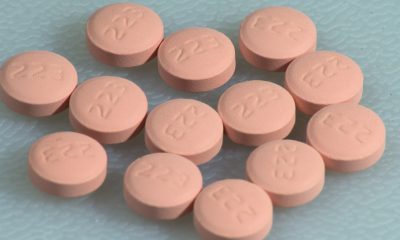
Photo by micheile dot com on Unsplash

HMNC Brain Health has raised €14.3m in a funding series, raised from existing investors, including Carsten Maschmeyer, the Jahr Group and Guntard Gutmann. 

New investors included Dr Josef Ackermann, formerly CEO of Deutsche Bank, Toni Kroos of La Liga club Real Madrid, Wilhelm Beier of Dermapharm and Hans Kompernaß of Hans Kompernaß GmbH.

HMNC has stated that the proceeds will be used to accelerate its precision psychiatry programmes, in which first-in-class pharmaceuticals are co-developed with proprietary genetic companion diagnostics to identify the patient groups most likely to benefit most from the treatments. 

See also  HMNC aims to make ketamine treatment first-in-class for patients

The company is aiming to innovate mental health care through the development of specific treatments with increased efficacy and reduced side effects, and will be harnessing genomics and Artificial Intelligence (AI) to develop them. 

In 2021, HMNC embarked on a joint venture with Develco Pharma to create the company Ketabon – a project developing a prolonged-release oral ketamine formulation for treatment-resistant depression (TRD). The company is hoping that the formula will provide the therapeutic benefits of ketamine without the ‘trip.’

The funds will advance the development of the Ketabon programme, which entered into a clinical Phase 2 trial in June 2022.

Chief business officer of HMNC Brain Health, Dr Maximilian Doebler, commented: “We are very pleased to receive support from both new and current investors. 

“With this funding, we will advance the development of our personalised therapies to combat severe, unmet mental health challenges around the world. 

“Raising additional capital is a tremendous vote of confidence in the promise of our clinical trial candidates, the power of precision medicine in psychiatry and our team’s ability to achieve its strategic priorities.”

The company secured investment from Toni Kroos, professional football player at Real Madrid, who highlighted how mental health is undervalued in sports.

Kroos stated: “Mental health is a serious issue that affects millions of people around the world. I have witnessed how mental health is undervalued in competitive sports in particular, even though the physical and psychological pressure is incredibly high. 

“The team at HMNC Brain Health are true pioneers in this field, combating mental illness with precisely tailored, individualised treatments, which is why I am delighted to be on board.”

Former CEO of Deutsche Bank, Dr Josef Ackermann, also invested.

Ackermann said: “I have always been intrigued by breakthrough innovations that improve people’s lives, especially when it comes to health. 

“That’s why I have decided to support HMNC as an investor and be part of the precision psychiatry revolution. Through investing in HMNC’s programmes, I want to foster an important societal impact in the fight against anxiety disorders and depression.”

Co-founder and member of the board of directors at HMNC Brain Health, Carsten Maschmeyer, added: “We are extremely encouraged by the progression of HMNC Brain Health’s activities to date, and equally confident in the team’s ability to achieve further success. 

“Over the past few months, HMNC has recruited key experts to join the team, and made great progress in advancing its medications and companion diagnostics. 

“Unsurprisingly, within a short period of time we attracted several new, renowned investors to support the maturation of HMNC Brain Health, who are as convinced as I am of the important role HMNC will play in treating mental health patients globally.”

HMNC Brain Health expects to complete a second closing of this round by end of March 2023.

Continue Reading
Click to comment

Leave a Reply

Your email address will not be published. Required fields are marked *

Markets & Industry

Trump Issues Executive Order to Accelerate Psychedelics for Mental Health 

Published

on

Trump

President Donald J. Trump signed an executive order on Saturday aimed at speeding up the development and approval of psychedelic-based treatments for serious mental illness in the United States.

The directive targets a range of conditions, including major depressive disorder and substance use disorders, specifically for patients who have not responded to traditional therapies.

The order signals a significant shift in federal drug policy by prioritizing the evaluation of substances like psilocybin and ibogaine, which are currently classified as Schedule I controlled substances. While advocates have hailed the move as a breakthrough for mental health innovation, medical experts have raised questions regarding the safety profile of some compounds and the practicalities of their implementation.

“Today’s Executive Order reflects growing recognition that modern mental health challenges demand new approaches,” said Betty Aldworth, Co-Executive Director of the Multidisciplinary Association for Psychedelic Studies (MAPS).

Key Provisions

The primary objective of the order is to streamline the regulatory pathway for “Breakthrough Therapy” drugs. Specifically, the directive instructs the Food and Drug Administration (FDA) to issue Commissioner’s National Priority Vouchers for psychedelic drugs that have already received breakthrough designations. These vouchers are designed to accelerate the review process, potentially reducing wait times for federal approval from months to weeks.

Furthermore, the order expands the “Right to Try” framework to include investigational psychedelic compounds. This provision is intended to allow patients with life-threatening or severely debilitating conditions to access experimental treatments—including ibogaine—provided they have met basic safety requirements and are currently under FDA review.

To bolster research at the local level, the Secretary of Health and Human Services (HHS) has been directed to allocate $50 million through the Advanced Research Projects Agency for Health (ARPA-H). This funding is earmarked to match state-level investments in psychedelic research programs. The move appears to follow the lead of states like Texas, which recently authorized state-funded research into ibogaine for veterans.

Federal Coordination and Scheduling

The executive order also mandates increased inter-agency cooperation. The HHS, FDA, and Department of Veterans Affairs (VA) are required to sign data-sharing agreements to pool clinical trial results. The goal is to provide the FDA with a more robust evidence base to facilitate timely evaluations.

Addressing the legal status of these substances, the order directs the Attorney General to initiate a review of relevant products immediately following the successful completion of Phase 3 clinical trials. This is intended to ensure that if a drug is approved by the FDA, the process of rescheduling it under the Controlled Substances Act can occur as quickly as possible.

What the Order Doesn’t Do

Despite the sweeping language of the directive, several legal and medical hurdles remain. The order does not immediately legalize or “deschedule” psychedelics. Substances such as MDMA, LSD, and psilocybin remain in the most restrictive federal category for illegal drugs. Any rescheduling remains contingent on the completion of rigorous Phase 3 clinical trials and subsequent FDA approval.

Importantly, the order does not mandate insurance coverage for these experimental therapies. Industry analysts noted that because these treatments remain largely unapproved, they are unlikely to be covered by private or public insurance in the near term, potentially limiting access to those who can afford out-of-pocket costs at private clinics.

“Today, people desperate for healing are traveling abroad or self-medicating with impure substances and little support. Efforts like today’s Executive Order must be paired with regulated psychedelics, provider training, and robust insurance coverage,” said Aldworth.

Finally, the order does not bypass existing safety protocols. While it seeks to “accelerate” the process, drugs must still demonstrate safety and efficacy through the standard clinical trial pipeline.

Medical and Scientific Context

The administration’s focus on ibogaine has drawn particular attention. Derived from a West African shrub, ibogaine has been studied for its potential to interrupt opioid addiction and treat post-traumatic stress disorder (PTSD). However, it is also known for potential cardiac toxicity. Some researchers expressed concern that emphasizing ibogaine over other psychedelics with more established safety profiles could be premature.

“As federal agencies move to reduce longstanding barriers to research, it is essential that progress across this broader class of compounds remains grounded in rigorous science, careful evaluation, and a commitment to patient safety,” said Ismail L. Ali, J.D., Co-Executive Director of MAPS. 

The advocate has called for “alignment with global public health principles” when working with ibogaine and the Iboga plant from which it’s extracted.

“Ibogaine has the potential to address the devastating crisis of opioid use disorder. However, because iboga is a limited resource, mass production of ibogaine can harm the people, traditions, and land where iboga is grow,” he said.

The order represents a rare area of emerging bipartisan interest, as lawmakers from both parties have expressed support for expanding research into how psychedelics might assist veterans and those struggling with treatment-resistant depression. However, the success of the initiative will ultimately depend on the results of ongoing clinical trials and the ability of federal agencies to navigate the complex safety and regulatory requirements involved in bringing Schedule I substances to the medical market.

Market Impact

The news provided a boost for companies in the psychedelics sector that are publicly traded, reflecting growing investor confidence in the field. Shares from Compass Pathways, a company with a Phase 3 program in psilocybin, were up 43% on Monday. AtaiBeckley was up 24% and GH Research 16%.

Picture: courtesy of the White House.

Continue Reading

Markets & Industry

Pink Elephant Launches Seed Investment Program For Startups in the Psychedelics Space

Published

on

Elephant Gate, a new accelerator launched by Pink Elephant, has opened applications for its inaugural cohort, aiming to support early-stage companies building foundational infrastructure for the growing psychedelics sector. The program will deploy $150,000 into up to ten pre-seed and seed-stage startups annually, with submissions open through May 15, 2026.

The new accelerator initiative fits into a growing trend of interest from investors and funds, following a long capital drought that affected the space from 2022 to 2024. While investment and consolidation picked up during 2025, it was mainly focused on drug discovery and development, leaving small startups and companies focused on developing the infrastructure for the implementation of psychedelic therapies out of the radar and fighting to survive.

Elephant Gate describes the psychedelics infrastructure subsector as “a critical gap in the ecosystem.”

As clinical trials expand, regulatory pathways evolve, and new compounds move closer to approval, the need for scalable systems supporting delivery, training, and patient access has become increasingly apparent, they have said in a press release.

The accelerator will run from 2026 through 2028, backing a total of 30 companies across three cohorts. While headquartered in San Francisco, Elephant Gate operates as a fully remote program with a global scope, explicitly inviting founders from Europe, Asia, and beyond to apply.

The initiative has secured partnerships with Psychedelics Today and JLS Fund, reflecting a blend of media reach, education, and venture capital expertise. Psychedelics Today reports an annual audience of over 2.2 million learners, while JLS Fund focuses on investments across neuroscience, mental health, and enabling technologies within psychedelic medicine.

Elephant Gate’s investment thesis centers on infrastructure layers rather than drug development itself. Areas of focus include education and training platforms, clinical support software, AI-assisted integration therapy, clinical delivery systems, and patient acquisition tools. However, the program maintains flexibility, encouraging applications from founders working outside these categories if they align with the broader ecosystem vision.

In addition to capital, selected companies will receive access to a network of practitioners and operators, along with go-to-market support and introductions to institutional co-investors. The program also emphasizes community building among founders navigating similar regulatory and operational challenges.

“The psychedelic ecosystem is emerging from the ground up,” said Natalia Fedulova, Partner at Elephant Gate. “We are here to back the entrepreneurs who are building the infrastructure that will define how millions of people access these therapeutic modalities over the next decades.”

Applications for the first cohort close on May 15, 2026, with the program open globally to pre-seed and seed-stage companies. Interested founders can apply directly or contact the team via email at hello@elephantgate.co

Continue Reading

Markets & Industry

Another Big Pharma Bet on Psychedelics: Otsuka Buys $1.2 Billion MDMA Analog Program

Published

on

Japanese pharma company Otsuka Pharmaceutical announced its acquisition of Transcend Therapeutics, Inc., a New York-based biotech company, through Otsuka’s wholly-owned American subsidiary. 

The primary driver of the acquisition is Transcend’s lead investigational asset, TSND-201, which is an analog of MDMA and last year received Breakthrough Therapy Designation by the U.S. FDA. 

Otsuka will pay Transcend shareholders an initial $700 million to close the deal. On top of that, the agreement includes the possibility of another $525 million in bonus payments if the drug reaches specific sales targets in the future. Altogether, the total value of the deal could reach as much as $1.225 billion.

TSND-201 compound is described as a rapidly acting neuroplastogen currently being evaluated for the treatment of post-traumatic stress disorder (PTSD). Like MDMA, TSND-201 stimulates the release of serotonin, norepinephrine, and dopamine. However, it is highly selective and does not directly activate the 5-HT2a receptor, which is the primary trigger for hallucinogenic “trips” in drugs like LSD or psilocybin.

Makoto Inoue, President and Representative Director of Otsuka said “TSND‑201 is generating expectations as a potential paradigm‑shifting therapy in the field of psychiatry.”

Lykos Therapeutics, the for-profit arm of MAPS, is currently restructuring after the FDA rejected its MDMA-assisted therapy for PTSD in August 2024. To seek future approval, the company must conduct a new Phase 3 trial to address concerns regarding trial unblinding, safety data, and ethical violations. 

Resubmission is not expected for several years, giving Otsuka an opening to take it’s newly purchased MDMa analog to market for the same indication.

Otsuka’s billion-dollar commitment reflects a growing trend of “Big Pharma” entering the psychedelic and neuroplasticity-focused medicine space. This follows another major industry milestone in August 2025, when AbbVie entered the sector through a $1.2 billion agreement to acquire Gilgamesh Pharmaceuticals’ lead candidate, bretisilocin. 

Similar to Otsuka’s interest in TSND-201, AbbVie’s investment targeted a “next-generation” psychedelic, purchasing a short-acting 5-HT2A receptor agonist designed to provide rapid antidepressant effects with a significantly shorter psychoactive duration than first-generation compounds.

This it not however, Otsuka’s first incursion into psychedelics. In 2023, Otsuka acquired the Canadian biotech company Mindset Pharma for approximately $80 million CAD ($59 million USD). This gave the Japanese company control over Mindset’s preclinical pipeline of psychedelic-inspired “families,” including psilocybin-like conjugates and DMT-inspired compounds. 

Otsuka was also an early investor in Compass Pathways and in 2025, the company recently signed a research agreement with Keio University in Japan to develop the necessary infrastructure for the implementation of psychedelics treatments in Japan.

With a market cap of $37 billion, Otsuka is currently the 32nd largest pharmaceutical company worldwide. By acquiring Transcend, Otsuka aims to expand its portfolio beyond its existing antipsychotic and antidepressant medications into the emerging field of neuroplasticity-based therapeutics.

Continue Reading

Trending

Psychedelic Health is a journalist-led news site. Any views expressed by interviewees or commentators do not reflect our own. We do not provide medical advice or promote the personal use of psychedelic compounds. Please seek professional medical advice if you are concerned about any of the issues raised.

Copyright © 2025 PP Intelligence Ltd.