

Connect with us

Medicinal

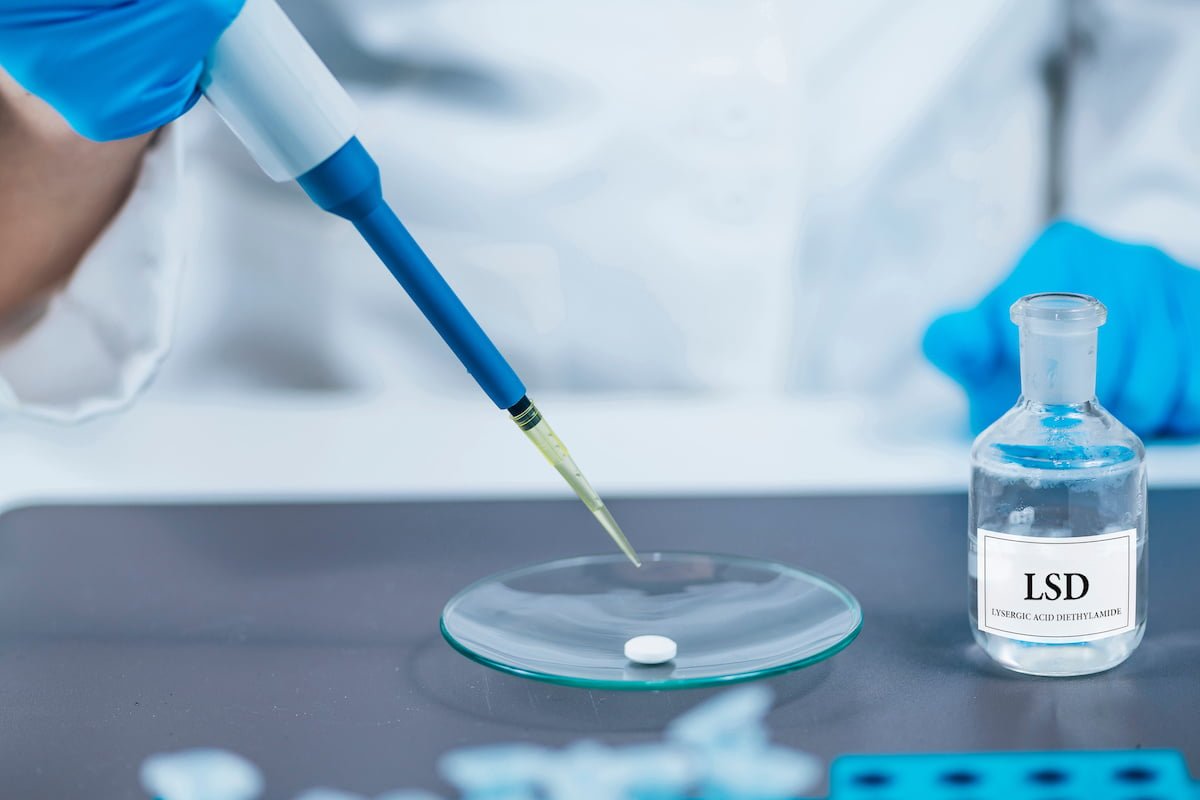
New study to prevent unfounded LSD therapy patents 

The study establishes the existence of a single polymorphic form of LSD D-tartrate.

Published

on

New study to prevent unfounded LSD therapy patents 

Freedom to Operate has published its new study that can be used to fight back against anyone attempting to patent a polymorphic form of LSD and its salts.      

Non-profit, Freedom to Operate, has published research on the polymorphic form of LSD D-tartrate, a common salt form of LSD. The organisation has stated that the study can be used by researchers, patent examiners and others to reject unfounded claims and to fight back against anyone attempting to patent a polymorphic form of LSD and its salts.  

With LSD garnering large amounts of interest as a promising treatment for mental health and neurological conditions, Freedom to Operate highlights that LSD-based medicines could be blocked or discouraged if a company or person contains a patent on the chemical structure or polymorphic forms of LSD and its salts.

See also  Analysis finds clinical administration of LSD safe in healthy subjects 

The mission of Freedom To Operate is to advance science and education, specifically research, in the public interest and for the public benefit, and it says publication of the study is a critical step to help protect and advance research and the development of LSD-based therapies that may eventually benefit millions of currently underserved patients.

Carey Turnbull, Founder and Director of Freedom to Operate, commented: “Freedom to Operate has sponsored and published this research so that any LSD researcher can benefit from this information, and it can be used by patent examiners and others to reject claims attempting to patent certain physical forms of LSD and its salts.”

See also  Comparing the acute effects of LSD and psilocybin

Typically, patents are awarded when a claim to a new invention is determined to be useful, novel and non-obvious, giving patent holders the exclusive use of their inventions. However, patent applications can be denied and existing patent grants revoked when evidence exists that the invention claimed was publicly known or obtainable prior to the filing of a patent application. 

Known as “prior art”, this evidence includes the publication of research such as the Freedom to Operate sponsored study that has just been made available via the organisation’s website and has been submitted to Porta Sophia, a non-profit website that protects psychedelic technologies in the public domain.

When LSD is made in a lab, it can be turned into a solid through crystallisation. This process creates crystals that contain molecules that repeat through space and settle into ordered patterns known as a polymorphic form, each with its own unique profile.  

These forms can be differentiated by using a laboratory technique known as X-ray powder diffraction to refract x-rays off samples. 

Freedom to Operate engaged an experienced independent chemical analysis laboratory to conduct the research. The researchers discovered that LSD D-tartrate, the most researched of the two forms of LSD tartrate, exists in a single polymorphic form, which they have designated as Form A.  

In establishing the existence of this single polymorphic form of LSD D-tartrate, this research will prevent others from claiming and being awarded a patent based on an alleged invention of this polymorph.

“This research establishes prior art on the existence of a single polymorphic form of LSD D- Tartrate”, said Turnbull.  

“By publishing this information and preventing patent claims we are ensuring that this potentially life-changing molecule will continue to be available for use in research and the development of treatments for patients.”

[activecampaign form=52]

Continue Reading
Click to comment

Leave a Reply

Your email address will not be published. Required fields are marked *

Evegreen

2025 in Psychedelics: Big Pharma Entry, Patient Access in Germany, Czech and Australia, Governments Expand Conversation With Stakeholders

Published

on

In 2025, the psychedelic medicine sector reached a more defined phase of maturity, as Big Pharma entry, late-stage clinical readouts, and incremental regulatory shifts began to reshape investor expectations, policy debates, and the direction of research across business, government, and academia.

Business and Investment

Big Pharma joins the sector as key companies push research goals forward 

2025 saw pivotal corporate developments across the major psychedelic medicine companies, uplifting investor expectations and clarifying some regulatory pathways. A slow but steady loosening of regulatory hurdles and positive clinical results have breathed new life into the sector, with some analysts reporting refreshed investor interest and a possible end to the capital drought that has slashed the space in recent years.

Big Pharma giant AbbVie, known for blockbuster drugs in immunology and oncology, agreed to acquire Gilgamesh Pharmaceuticals’ lead experimental therapy, bretisilocin, in a deal reportedly worth $1.2 billion. Bretisilocin is a novel psychedelic targeting major depressive disorder. The event is a signal of Big Pharma entering the space and prioritising shorter-acting serotonin-2A modulators for depression.

Compass Pathways reached a major clinical inflection point, reporting positive results in its first Phase 3 COMP360 trial and accelerating commercial launch planning. CEO Kabir Nath recently told Psychedelic Health that positive talks with the FDA indicate that the company “could potentially be looking at a launch in early 2027” for its flagship program with synthetic psilocybin.

Beckley Psytech, which is supported by Atai Life Sciences secured a Breakthrough Therapy designation by the FDA for BPL-003, a novel intranasal formulation of 5-MeO-DMT, reinforcing regulatory momentum the compound known as “toad venom.” The FDA’s decision follows promising results from a Phase 2b clinical trial, which demonstrated that a single dose of the compound led to rapid and sustained reductions in depressive symptoms within 24 hours, with effects lasting up to eight weeks.

Cybin advanced multiple clinical programs, completing enrollment milestones for CYB004, a version of DMT targeting generalised anxiety disorder and maintaining progress on CYB003, a 5-HT2A receptor agonist similar to psilocybin for major depressive disorder. The company secured financing to extend runway and protect intellectual property across its portfolio.

MindMed reported faster than expected enrollment in its Phase 3 MM120 program, an analog of LSD targeting generalised anxiety disorder, updating timelines for topline readouts and emphasising oral LSD analogs as a differentiated regulatory route. 

Policy and Regulation

Major global players reschedule psychedelics for medical use

2025 marked a year of uneven but consequential movement in psychedelic policy and regulation, with a small number of jurisdictions taking concrete steps toward medical access while others remained in exploratory or preparatory phases.

The UK’s regulatory landscape for psychedelic medicine continued to evolve through policy dialogue and research initiatives, although no formal legalisation or medical scheduling changes occurred. The Royal College of Psychiatrists published a position statement reviewing evidence on psilocybin, MDMA, LSD, and ketamine, concluding that current data are promising but insufficient to recommend routine clinical use outside licensed settings, emphasising the need for more robust trials and caution against premature adoption.

This year, the UK government agreed in principle with key Advisory Council on the Misuse of Drugs (ACMD) recommendations to ease barriers to Schedule 1 psychedelic research. Part of the recommendations included allowing universities and hospitals to conduct research without a Home Office domestic licence, and ethically approved clinical trials to be exempt from additional licensing. Though these changes are not in effect yet, they could be enacted after a pilot program takes place.

Australia continued to stand out as a global pioneer in medical access. Since 1 July 2023, MDMA and psilocybin have been rescheduled from strictly prohibited status to controlled medicines, meaning authorised psychiatrists can legally prescribe them for treatment-resistant depression and post-traumatic stress disorder. From 6 January 2025, new quality standards for MDMA and psilocybin products came into force, requiring compliance for all supplied APIs and finished products. The Department of Veterans’ Affairs approved funding for psychedelic-assisted psychotherapy for eligible veterans, marking a first step toward public payer support.

In Europe, Germany became the first EU country to establish a formal compassionate use access programme for psilocybin, enabling adults with treatment-resistant depression to receive psilocybin therapy at specialised centres under a regulated framework prior to full regulatory approval. This initiative, supported by the German Federal Institute for Drugs and Medical Devices and implemented at facilities in Mannheim and Berlin, marks a landmark step in European psychedelic policy.

The Czech Republic is set to become one of the first European countries to legalise medical use of psilocybin from January 1, 2026. The outgoing government approved legislation late in 2025 allowing psychiatrists and psychotherapists to administer psilocybin for conditions such as cancer-related depression and serious clinical depression when other registered treatments have failed or are not tolerated. Psilocybin therapy will be introduced under controlled clinical conditions at qualified facilities.

In the United States, action remained at the state-level. Oregon and Colorado, having already legalised regulated access to natural psychedelics including psilocybin and launched supervised service programs, continued to refine implementation and data collection frameworks in 2025. Meanwhile, numerous state legislatures introduced bills to advance psychedelic therapy access, and Massachusetts held legislative hearings on psychedelic therapy programmes, reflecting growing political engagement despite the absence of federal reclassification.

Science and Research

New data from real-world applications and feedback from regulatory agencies inform research 

In the academic side of the equation, 2025 consolidated a transition from exploratory efficacy signals to confirmatory, regulation-relevant evidence, while underscoring persistent limitations: small sample biases, variable control conditions, and unresolved questions about long-term safety and scalability.

One of the most significant published findings came from a phase 2 trial in cancer patients, where a single dose of psilocybin combined with therapy produced sustained reductions in depression and anxiety, with many participants maintaining benefits up to two years later. 

Alongside observational outcomes, mid-stage clinical studies have found LSD may ease anxiety symptoms for up to three months in people with moderate-to-severe generalised anxiety disorder, with a significant proportion of participants still in remission at 12 weeks.

For the first time, data from real-world application of psilocybin treatment under a regulated program was published by one of the Oregon clinics providing treatment, sharing insights into how the legal, real-world version of the treatment works, who can access it, and whether the benefits observed in trials translate to broader populations.

Longitudinal data strengthened claims of sustained benefit in selected cohorts. Multiple follow-up reports published in 2025 described durable antidepressant effects at extended intervals after single or limited psilocybin administrations, although most samples remained small and non-randomised. These findings have prompted calls for larger, controlled long-term studies. 

The FDA’s public release of the complete response letter on Lykos Therapeutics’ trials on MDMA therapy highlighted durability and safety questions, prompting re-examination of trial design and participant selection in MDMA and related programmes.

Cambridge Psychedelic Research Group formally launched in 2025, creating a new hub for clinical trials and interdisciplinary research in the UK, including pathways for patient recruitment and academic-industry collaboration.

Illustrated image made using AI tools.

Continue Reading

Markets & Industry

Netflix Premieres New Documentary on Ibogaine as Ambio Launches Europe’s First Physician-led Ibogaine Facility

Published

on

Ambio Life Sciences, a company known for its physician-led ibogaine therapy programmes, has been thrust into the global spotlight with the release of In Waves and War on Netflix, a documentary filmed at one of its treatment facilities, while simultaneously announcing the opening of its first European clinic in Malta. 

Ambio is a clinical organisation that offers medically supervised ibogaine programmes focused on trauma recovery, neuroregeneration and substance use disorders. The company’s leadership will be part of PSYCH Symposium: London 2025, occurring at London’s Conway Hall on December 4.

 In Waves and War 

The new Netflix documentary follows several former U.S. Navy SEALs as they confront the psychological and neurological scars of combat, including post-traumatic stress and traumatic brain injury, through ibogaine-assisted therapy. Filmed partly at Ambio’s clinic in Mexico, the film presents a rare, direct view of what such treatment entails and how it fits into the broader debate about the role of psychedelics in addressing mental health and substance use disorders.

In the film, Ambio showcases a clinical model that departs from the underground or informal settings that have long characterised ibogaine use. The company’s approach, grounded in medical oversight and structured aftercare, contrasts sharply with earlier practices and aligns with emerging calls for regulated, evidence-informed psychedelic care.

Ambio Life Sciences CEO and Co-Founder Jonathan Dickinson said to Psychedelic Health that the film’s timing is both urgent and consequential. “It is now 24 years after the start of the Global War on Terrorism, and rates of veteran suicide continue to rise. This film is being released to a global audience at a crucial time. The good news is, ibogaine is uniquely capable of addressing the intersection of mental health challenges, neurocognitive injury, and substance use,” he said. “Over the past five years, ibogaine in Mexico has quietly become the treatment of choice for the operator community, many describing immediate and lasting relief, often after years of failed conventional treatments.”

The documentary also foregrounds patient voices. Retired Navy SEAL and Ambio patient DJ Shipley, one of the film’s central figures, described his experience: “Ibogaine allowed me to become a better, more well-rounded version of myself, someone with more empathy, more compassion, but without losing my edge. I’m incredibly proud of my castmates and the directors. They did a beautiful job telling our story. I truly hope this film changes lives and helps people find strength in its vulnerability.”

The New Malta Clinic

Alongside the film’s debut, Ambio announced the launch of its new clinic in Malta, described as Europe’s first physician-led ibogaine facility. According to the company’s release, the centre offers a structured residential programme that combines medical screening, 24-hour physician supervision and integrated therapeutic support. Treatments will take place in a medically equipped environment with on-site emergency protocols, a full-time medical team, and facilities designed for private accommodation and holistic therapies such as breathwork and somatic work.

The Malta site marks Ambio’s first expansion beyond North America and establishes a strategic base for patients from Europe, Canada and the eastern United States. By creating a clinic that operates under formal medical oversight, Ambio seeks to raise safety standards and expand accessibility in a field that has often been criticised for its lack of regulation.

Ambio Life Sciences, founded by clinicians with experience treating addiction and trauma through ibogaine, positions itself as a provider of evidence-based, medically supervised psychedelic care. The company’s work has focused on neuroregenerative and trauma-related conditions, with a particular emphasis on veterans and first responders.

The combination of global media exposure and clinical expansion underscores Ambio’s role in shaping the public perception and practical delivery of ibogaine treatment. As both scrutiny and interest in psychedelic medicine intensify, Ambio’s visibility through In Waves and War and its new European operations will test how far the treatment can move toward mainstream medical acceptance.

Picture courtesy of Ambio Life Sciences.

Continue Reading

Evegreen

Psilocybin Shows Promise in Treating Obsessive-Compulsive Disorders: Is the Industry Getting Involved?

Published

on

A newly published systematic review titled on psilocybin’s effects on obsessive‑compulsive behaviours provides an up-to-date synthesis of research into the compound’s potential for treating OCD and related disorders. 

The study integrates findings from both animal models and early human trials, drawing attention to a consistent signal: reductions in obsessive or compulsive behaviours following psilocybin administration.

The review shows that in preclinical models (for example mice with altered grooming behaviours) psilocybin (or its active metabolite) produced marked reductions in compulsive-like behaviours, sometimes lasting beyond the immediate administration period. 

Clinically, although data remain limited, participants in early trials or case reports experienced rapid reductions in symptom severity (for example within hours or days) after single doses. The authors emphasise that while the mood-disorder applications of psilocybin are more advanced, this compulsive-behaviour indication is an important frontier.

In humans, single doses of psilocybin led to rapid symptom reductions. For example, in an open‑label study of nine treatment‑resistant OCD patients, reductions of 23 % to 100 % on the Y‑BOCS scale were recorded between 4 and 24 hours after dosing. A pilot trial in body dysmorphic disorder (a related OCRD) using a 25 mg psilocybin dose reported sustained improvements over 12 weeks in 58.3 % of participants. 

Mechanistically, the review highlights that psilocybin’s effects on compulsivity may not map exactly onto its classic psychedelic mechanism (5-HT₂A receptor activation). Some animal data suggest alternate or additional pathways (for instance 5-HT₇ receptor involvement, synaptic protein modulation) may underpin the anti-compulsive outcomes. The authors call for more robust, placebo-controlled human trials, ideally with neuroimaging and circuit-level biomarkers, to validate these early signals and clarify therapeutic protocols. 

The authors of the review emphasise that while the findings are promising, the evidence remains early stage. Key limitations include small clinical sample sizes, lack of placebo‑controls, short follow‑up intervals and heterogeneity in doses and models. They call for larger, double‑blind, placebo‑controlled trials incorporating neuroimaging of fronto‑striatal circuits, to more precisely map psilocybin’s effect in OCRDs. 

The authors propose that psilocybin may one day serve as a treatment for disorders characterised by repetitive, intrusive behaviours, not just mood disorders.

Are companies developing psilocybin-based treatments for OCD?

Several biotechnology companies are advancing psilocybin-based therapies for obsessive-compulsive disorder (OCD), signalling growing clinical interest in this area. 

Ceruvia Lifesciences has received U.S. FDA approval for an Investigational New Drug application to begin a Phase 2 trial using its synthetic psilocybin compound, SYNP-101, for OCD. The multicentre, randomised, double-blind, placebo-controlled study will administer a single oral dose and monitor participants for 12 weeks to assess symptom reduction, making it one of the most advanced OCD-focused psilocybin programmes.

Filament Health is developing PEX010, a botanical psilocybin drug exported to Israel for a trial investigating treatment-resistant OCD and PTSD.

MycoMedica Life Sciences lists OCD among its target indications, though its programmes remain early stage, while Compass Pathways is exploring broader psychiatric uses for COMP360, including potential applications in OCD.

Photo by Mélissa Jeanty on Unsplash.

Continue Reading

Trending

Psychedelic Health is a journalist-led news site. Any views expressed by interviewees or commentators do not reflect our own. We do not provide medical advice or promote the personal use of psychedelic compounds. Please seek professional medical advice if you are concerned about any of the issues raised.

Copyright © 2025 PP Intelligence Ltd.