Connect with us

News

Data shows combination psilocybin therapy effective for TBI and PTSD

Published

on

Data shows combination psilocybin therapy effective for TBI and PTSD

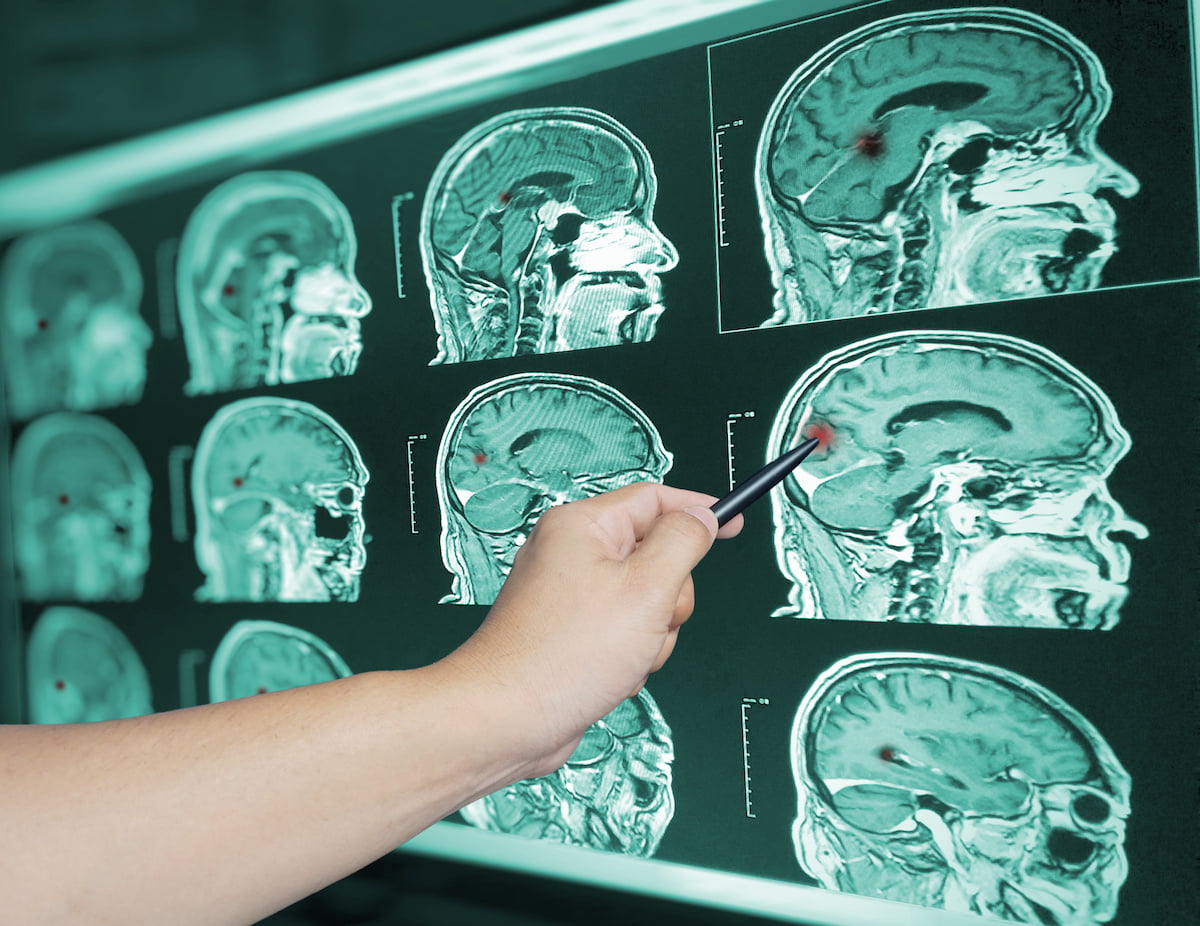
Data from Lobe Sciences has demonstrated that combination therapy of psilocybin and N-Acetylcysteine is more effective than monotherapy for mTBI and PTSD.

Lobe Sciences has announced interim data from its preclinical research studies showing the effectiveness of its combination therapeutic candidates, demonstrating that psilocybin and N-Acetylcysteine is statistically significantly better than either agent alone or a placebo for mild traumatic brain injury/concussion (mTBI) and post-traumatic stress disorder (PTSD).

The research, being conducted in collaboration with the University of Miami Miller School of Medicine under the leadership of Michael Hoffer, M.D., professor of otolaryngology and neurological surgery, was carried out in established rodent models of mild traumatic brain injury/concussion PTSD.

CEO of Lobe, Philip Young, commented: “I am thankful to Dr Hoffer and his team for their excellent work. This data is validation of our therapeutic hypothesis that the use of these two active therapeutics provides superior efficacy to either placebo or single-drug therapy in this model of TBI and PTSD. We believe that these data directly support our IP and will allow us to build on our leadership position in the rapidly evolving psychedelic therapeutics marketplace.

“Despite the significant shortage of psilocybin in North America the Miami team was able to deliver these data. However, the shortage has impacted the timing of the next planned studies. We have responded to this supply shortage by working to identify a manufacturing company who will supply high purity cGMP psilocybin to the University of Miami so that the remaining studies can be completed.”

See also  MDMA, LSD and psychedelic research gets Health Canada exemption

Dr Hoffer added: “These are promising results that suggest that a combination of psilocybin and NAC can work better than either drug administered as a single agent after traumatic brain injury. We look forward to future work that will help to reaffirm these outcomes and further clarify the role of medical countermeasures in combatting traumatic insults to the brain.”

“We are extremely pleased that the interim data from our preclinical studies validates our therapeutic hypothesis that NAC plus psilocybin would provide superior efficacy over either agent used alone. NAC remains the only compound that has successfully completed a human phase 1 equivalent trial in a population of individuals who had acute mTBI.

“Dr Hoffer’s team has made significant in-roads studying psychedelic medicine and NAC specifically as it relates to mTBI and PTSD. Given there are currently no approved medicinal treatments for mTBI and PTSD, we feel this data is supportive of our plans to advance into future human clinical trials which we hope will eventually lead to approved therapeutics for these unmet needs,” commented Maghsoud Dariani, CSO of Lobe.

Evegreen

Compass Pathways’ CEO on Potentially Being the First To Bring a Classic Psychedelic To Market

Published

on

Compass Pathways is one of the companies spearheading clinical development of synthetic psilocybin, the compound naturally found in psilocybin mushrooms. 

Founded in 2016, Compass Pathways built its company around COMP360, a proprietary synthetic psilocybin formulation. Currently ready to begin a second phase 3 trial in treatment-resistant depression, Compass is expecting to potentially lead the first approval of a classic psychedelic by the U.S. FDA.

Psychedelic Health sat down with Compass Pathways CEO Kabir Nath, to discuss the company’s most recent milestones and plans for the future, ahead of the company’s stage appearance at PSYCH Symposium: London 2025, happening at Conway Hall, December 4.

In its most recent quarterly call, Compass emphasized the successful primary endpoint in its first Phase 3 trial, positioning COMP360, as the first psychedelic treatment to reach this milestone in treatment-resistant depression. 

The company reported plans to accelerate commercial readiness, expand provider education, and continue learning from their clinical delivery collaborations to support regulatory submission and launch timelines, underscoring its transition from experimental research toward potential market entry.The company recently announced that based on recent successes and developments, it’s pulling forward the projected launch date for COMP360 by about one year.

“We had a good discussion with the FDA about the potential for a rolling submission and rolling review, which for the psychiatry division would definitely be something they have not historically done,” said Nath.

These measures could put the drug in a fast track status with the FDA, allowing it to reach the market sooner than previously expected.

See also  Psilocybin analogue shows promise for major depressive disorder

Nath says that because Compass has already completed enrollment in their second psilocybin study, they’re now looking to have a significant data release in the first quarter of next year.

“That suggests we could potentially be looking at a launch in early 2027,” he said, which would mean a pull forward of roughly one year from previous projections of a launch in 2028.

“We have runway into 2027, so we have cash to see us through all of our phase 3 readouts,” he said.

In its most recent financial results, the company reported having $185.9 million USD (£140.7 million) in cash or cash equivalents.

Dealing With Lykos Therapeutics’ FDA Rejection

Last year, the U.S. FDA rejected an application from Lykos Therapeutics, formerly MAPS, for the approval of MDMA therapy. The event marked a low point in the history of the recent psychedelic renaissance, taking many activists and investors to wonder when one of these compounds would finally reach approval by a major regulating body.

Nath made a point to separate Compass’ pipeline from that of Lykos.

“MDMA is not a classic psychedelic, MDMA is more of a pathogen, and so the therapy component is really important for MDMA, the actual dialog, the interaction with a therapist. For classical psychedelics like psilocybin or LSD, that’s not the case” he said.

While Lykos were trying to get a drug/therapy combination approved, Compass is trying to get a drug with monitoring and support approved. This marks a major difference from how the two companies present their results to the FDA.

Since Lykos was a spin-off from MAPS, which is an NGO working for decades to gather data on MDMA treatment, this could have led to issues around “some of the basics around safety, safety reporting, and collection of adverse events,” said Nath.

See also  Expert UK body Drug Science launches consultancy arm

While Compass is looking at the U.S. market first, it has designed its studies with scientific advisors from Europe and the UK.

“We know that if these studies are successful, they would meet regulatory standards in Europe, but obviously that would be a separate application,” Nath said.

How Does Compass See Its Role and Influence As a Market Leader?

If COMP360 becomes approved, it will invariably influence the broader psychedelics space since it would be the most significant event since psychedelics came back into mainstream attention for healthcare use, starting in the early 2000s.

How does Compass see its ability to influence the broader market and levels of excitement moving investors and the general audience to become interested in these drugs?

“We are focused on executing this ourselves and, getting COMP360 across the finish line. But I completely recognize that, because we are likely to be the first, by some way, what we do and how we set about commercializing and being successful, is going to influence how others do,” says Nath.

Still, Nath is sure to point out that “the infrastructure that’s already been established for Spravato is actually the infrastructure that most of us in psychedelics will be plugging into.”

That means that treatment with COMP360 could potentially be provided by the same clinics currently providing treatment with ketamine, which means the drug could count with an existing infrastructure of thousands of clinics across the U.S., the UK and Europe ready to provide its treatment.

See also  Beckley Psytech doses first patients in novel 5-MeO-DMT study
Continue Reading

Evegreen

Can Ego Death Be Measured? New Study Finds Link in Brain Activity After One DMT Dose

Published

on

A new study in The Journal of Neuroscience has shed light on how the psychedelic N,N-Dimethyltryptamine, or DMT, changes brain activity during its most intense psychological effects.

The research focuses on a key experience reported by many users of the drug, the temporary disappearance of the sense of self, often called ego-dissolution.

DMT is known for producing rapid, vivid and immersive psychedelic states that unfold within minutes. The study, led by Mona Irrmischer and colleagues, set out to identify what happens in the brain during this altered state, and how those changes relate to subjective feelings of becoming “less of a person,” or losing individual identity.

Dr Christopher Timmermann, one of the study’s co-authors, will be a panelist at the upcoming PSYCH Symposium: London 2025, on December 4 at London’s Conway Hall, where key figures in the psychedelics space will meet to discuss the future of policy, research and patient roll out.

To investigate this, the researchers used electroencephalography, EEG, which records electrical activity from the scalp. Twenty-seven healthy volunteers took part in two separate clinical sessions. In one, they were injected with DMT. In the other, they received a placebo saline injection. Neither participants nor experimenters were told which session was which at the time. EEG was recorded before and after injection, and participants later rated their subjective experience, including whether they felt the boundaries of their self dissolve.

The team measured what they call “criticality,” a property of brain activity that reflects the balance between order and randomness. A near-critical brain is thought to be versatile, able to shift fluidly between different states. It maintains patterns across long periods of time, which helps organize thought, perception and the experience of continuous identity. When the brain moves away from this balance, signals may become either too rigid or too chaotic.

See also  New collaboration to conduct MDMA-assisted therapy trial for PTSD

To quantify this, the researchers used two tools. One, detrended fluctuation analysis, or DFA, measures how consistent brain rhythms remain over longer timescales. Higher values indicate more structured, temporally coherent activity. Lower values show more noise and unpredictability. The other measure, the functional excitatory-inhibitory ratio, distinguishes whether changes push the brain toward suppressed subcritical states or toward unstable supercritical activity.

Under DMT, DFA values dropped significantly across several frequency bands, especially alpha rhythms. This means brain signals became less temporally organized and more entropic. The effect was widespread, not limited to a small region, indicating a broad shift in how neural networks behave over time.

The excitatory-inhibitory analysis provided further clarity. Rather than showing runaway excitation, the changes suggested that DMT pushed brain dynamics toward subcritical states, especially in parietal and occipital regions. These parts of the brain help integrate sensory information and support internal models that anchor a person’s sense of being a continuous self. Under DMT, their activity became less structured and less stable.

Critically, these neural shifts were directly tied to how people felt. Participants who reported stronger ego-dissolution also showed the biggest reductions in criticality, particularly in theta and alpha bands. This correlation suggests that the breakdown of long-range, temporally organized brain activity is closely linked to the subjective loss of self.

The authors emphasize that these effects do not resemble unconsciousness. Instead, they reflect a brain that cannot maintain its usual long-term patterns of self-representation. Without the steady temporal scaffolding that normally supports identity, experience becomes immediate, immersive and unanchored.

See also  UK festival to explore psychedelic medicine

The study challenges a simple picture of psychedelics as increasing brain flexibility by moving closer to a balanced critical state. Under DMT, entropy does increase, but the rhythms most involved in self-processing move away from balanced dynamics. The result is not random chaos but a specific weakening of the neural patterns that hold the self together.

By showing how a psychedelic alters the brain in real time, the research provides a clearer biological explanation for one of the most mysterious psychedelic effects. It points to ego-dissolution not as a vague spiritual idea, but as a measurable change in how the brain organizes its activity over time.

Image made using AI tools.

Continue Reading

Events

PSYCH Symposium: London 2025—What To Expect At Europe’s Landmark Psychedelic Gathering

Published

on

On 4 December 2025, London’s Conway Hall will host the third PSYCH Symposium, bringing together leaders across science, policy, investment and clinical medicine to chart the next phase of psychedelic healthcare in Europe.

Organised by Prohibition Partners in partnership with Drug Science, the gathering follows two sold out editions in 2022 and 2023.

The 2025 programme will explore the latest developments in psychedelic research, regulation and clinical delivery. Confirmed speakers include Drug Science’s Chair, Professor David Nutt, who’s also Professor of Neuropsychopharmacology and Head of the Centre for Psychedelic Research at Imperial College London, Jeff Smith MP, Co chair of the All Party Parliamentary Group for Drug Policy Reform, Professor Celia Morgan, Chair of Psychopharmacology at the University of Exeter, Dr Chris Timmermann, Research Fellow at University College London, and Nige Netzband, Founder of Athletes Journey Home UK, among many others.

Panels, keynotes, workshops and fireside interviews will examine new clinical data on psilocybin, MDMA, ketamine and emerging compounds, as well as policy frameworks, regulatory considerations, patient access and ethics within psychedelic assisted therapies.

Attendees at PSYCH Symposium London 2025 will engage in a fireside conversation titled “Are We Ready? The Future of Psychedelic Medicine in Mainstream Healthcare,” where Professor David Nutt and Dr Guy Goodwin, Chief Medical Officer at Compass Pathways, will examine whether psychedelic-assisted therapies can scale beyond specialist clinics and trials. 

Another key session, “MDMA-Assisted Psychotherapy: Working Out How It Works,”, features Professor Sunjeev Kamboj and Elisa Liberati presenting UCL’s latest MDMA trial (in collaboration with Drug Science)

See also  Comparing the acute effects of LSD and psilocybin

 In “Disrupting Dependency: Psilocybin Therapy for Opioid Use Disorder,” experts will present early evidence from clinical trials that explore psilocybin as a treatment for opioid addiction, a pressing public health concern in the UK and beyond and in “Designing Breakthroughs: A New Human Study for Anorexia Treatment,” Dr Nadya Lisovoder of Shortwave Life Sciences and Roei Zerahia of MSICS Pharma outline a feasibility study exploring psychedelic assisted treatment for anorexia nervosa.

Two panels, including “Bridging the Gap Between Indigenous Wisdom and Modern Science” and “The Jungle vs. The Journal: What Western Science is Missing” examines the divide between clinical research and traditional indigenous practices. 

Organisers position the symposium as a forum designed to shape realistic and responsible pathways for psychedelic medicine in the UK, Europe and abroad. London’s role is central because the city hosts leading research institutions, an active investment community and an environment where regulatory innovation is closely monitored by international stakeholders.

Stephen Murphy, founder and CEO of Prohibition Partners, has characterised PSYCH Symposium as a focal meeting point for Europe’s psychedelic medicine sector, bringing investors, regulators, researchers and clinical leaders together in one place. He also emphasised the importance of grounding the conversation in patient needs and health outcomes, a theme he has carried through his broader work in emerging health industries.

“The sector is entering a phase where evidence, governance and clinical standards matter more than headlines. At PSYCH Symposium we want to create a space where scientists, policymakers and practitioners can examine what is working, what is not, and what must be built next for psychedelic treatments to serve patients safely and effectively,” said Murphy.

See also  Study to investigate Hallucinogen Persisting Perception Disorder and anxiety

Professor David Nutt recently said to Psychedelic Health that he continues to strive for the regulation and equitable access of psychedelics because he believes they’re are “the most exciting new treatments for mental health disorders and addictions in half a century.”

Attendees at PSYCH Symposium can expect a curated and focused environment. The symposium is designed to facilitate meaningful exchanges between clinical trial leaders, policymakers, funders and practitioners, with attention to the specific regulatory and clinical context of the UK.

As psychedelic medicine moves toward more formal integration into mental healthcare systems, PSYCH Symposium London 2025 aims to consolidate current progress, present new evidence and support informed discussion on pathways to wider patient access. 

The full agenda for the event can be found at https://www.psychsymposium.com/agenda

Picture: PSYCH Symposium 2022 edition

Continue Reading

Trending

Psychedelic Health is a journalist-led news site. Any views expressed by interviewees or commentators do not reflect our own. We do not provide medical advice or promote the personal use of psychedelic compounds. Please seek professional medical advice if you are concerned about any of the issues raised.

Copyright © 2025 PP Intelligence Ltd.